पाठशाला Pathshala · वृद्धि Vṛddhi, Growth · Lesson 29 · Scale
Offline distribution: general trade, modern trade and the distributor margin
A brand on India’s shelves pays a chain of people to carry it there and lends them money while they do. Work out the margin ladder, the distributor’s return and the working capital before the first truck leaves.
Pathshala, The Founder Library · 11 October 2026 · 7 min read

A snacks brand that sells well online signs up distributors in two cities in a month. Six months later its warehouse is empty, its receivables are full, the products are on a few hundred shelves and nobody can say how many packs a week those shelves sell. That is what offline distribution looks like when it is treated as a channel to switch on rather than a business to finance.
Most of what India buys in packaged goods is still bought in a shop. The largest consumer company shows the scale: Hindustan Unilever’s report for 2024–25 describes a total distribution reach, direct and indirect, of over 9 million stores, alongside its e-B2B platform Shikhar that lets retailers order digitally. A young brand will not reach a fraction of that, and should not try. It should enter one city or district at a time with the economics written down, which is what this lesson does. The [quick commerce and marketplace lesson](/library/selling-on-amazon-flipkart-quick-commerce) covers the online shelf.
How a product reaches a kirana
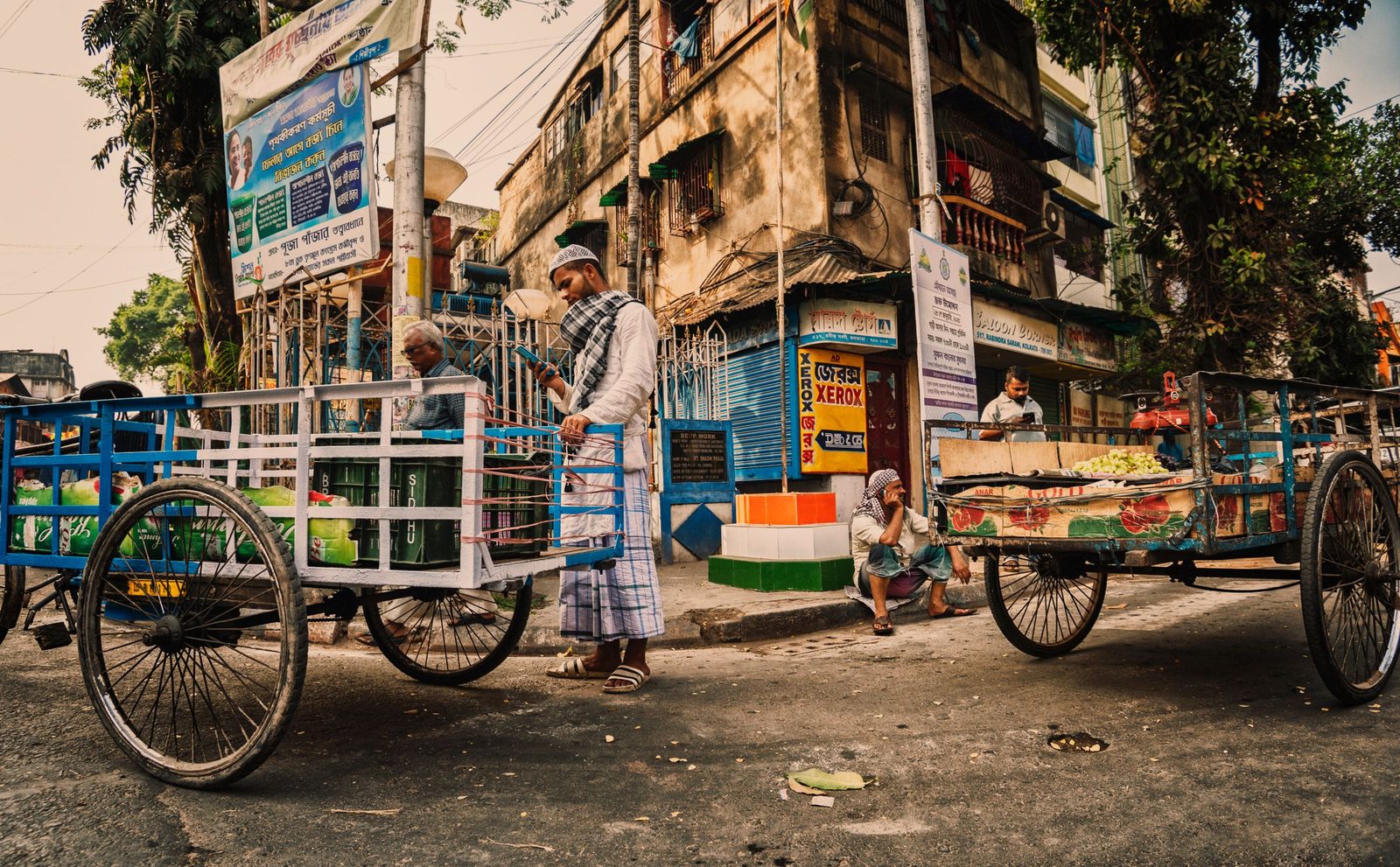
General trade is the network of independent shops: kiranas, chemists, paan shops, bakeries and wholesalers. A brand reaches them through a chain. Goods leave the factory or contract manufacturer for a warehouse, sometimes run by a carrying and forwarding agent or a super stockist covering a state or region. From there they go to distributors, each appointed for a town or a set of areas, who buy the stock, hold it in their own godown, send salesmen to each shop on a fixed weekly route called a beat, deliver, extend credit to the shops and collect. In towns too small for a distributor, sub-stockists or wholesalers carry the goods on.
Modern trade is the organised retail chains, supermarkets and hypermarkets, which buy centrally or regionally under a negotiated agreement and receive stock at their own distribution centres. The two channels have different economics, and most brands should master one before the other. Two terms run through both. Primary sales are what the brand sells to the distributor or chain; secondary sales are what the distributor sells to shops. A brand that measures only primary sales measures how much stock it has pushed into the channel, not how much consumers bought.
The margin ladder from MRP
Every margin in the chain is carved from the maximum retail price printed on the pack. Under the Legal Metrology (Packaged Commodities) Rules, 2011, the retail sale price is the maximum price at which the packaged commodity may be sold to the consumer, declared inclusive of all taxes, and no retailer, wholesaler or manufacturer may sell above it. So GST comes out of the MRP first. Rates changed recently: under the GST reforms announced on 4 September 2025, effective 22 September 2025, the structure moved to two main slabs of 5 and 18 per cent, with toilet soap, shampoo and toothpaste at 5 per cent and namkeen and chocolates cut from 12 or 18 per cent to 5. Check your own product’s rate and date of checking.
From the price before tax, the retailer keeps a margin, the distributor keeps a margin on what he sells to the retailer, and trade schemes, the discounts, free goods, display payments and claims that drive sell-in, come off what the brand receives. What is left is the net realisation, and the brand’s own product cost, freight, salesforce and marketing come out of that. Margins vary widely by category, region and brand strength; ask three distributors and five retailers in your category what they earn on the leaders and agree yours from that, then put the figures into the ladder below.
At the defaults, a ₹100 pack at 5 per cent GST, with a 15 per cent retailer margin, an 8 per cent distributor margin and 5 per cent schemes, returns about ₹70.75 to the brand, a little over 70 per cent of MRP, before the cost of making and moving it. Move the GST to 18 per cent and the same margins return about ₹63. Those few rupees are the difference between a category that can pay for distribution and one that cannot.
A distributor is a small business that lends you his godown, his salesmen and his credit line. He stays only while that pays him better than the next brand would.
What the distributor needs to earn
Think of the distributor as an investor in your product. He puts money into your stock, into the credit he gives shops, into salesmen and a delivery vehicle, and earns his margin on every rupee that turns over. His return depends on two numbers: the margin and how many times a year the money turns. A thin margin on a product that sells through in a week can beat a fat margin on one that sits for two months. The figure shows his gross annual return on the money tied up; his salesmen, vehicle, godown and bad debts come out of it, and if what is left does not beat the other brands he carries, your product is the last one his salesmen mention.
So a young brand helps a distributor earn by turning its stock fast: start with few products, the ones that sell; support the first months with consumer demand in the territory, not just trade schemes; keep supply reliable so his capital is not stuck in a product that cannot be reordered; settle claims and schemes on time. Appoint distributors who already serve the shops your buyer uses, with salesmen on beats that cover them, and give each a territory he can serve without overlap.
Fill rates and the beat
Two measures tell you whether the channel works. Fill rate is the share of what was ordered that was delivered, measured at each step: what you supplied against what distributors ordered, and what distributors delivered against what shops ordered. A shop that orders twelve packs and receives eight learns not to rely on you, and the empty space on its shelf goes to a competitor. Track it by distributor and by product every week. Beat coverage is the share of shops on each salesman’s route that are visited as planned and the share that billed your product. Add numeric distribution, the share of target shops in a territory that stock you, and throughput per shop, packs sold per stocking shop a week, and you have the four numbers that explain secondary sales.
Distributor management software and salesman ordering apps make these measurable; ask for secondary sales data by shop as a condition of appointment. Without it, the only signal is primary orders, which can stay healthy for months while stock piles up in godowns and on shelves. The [field teams lesson](/library/hiring-and-managing-field-teams-across-india) covers hiring and managing the brand’s own sales officers who supervise distributors.
Modern trade is a different contract
Supermarket chains buy centrally and negotiate everything: margin, listing or new-product fees in some chains, payment terms, display and promotion payments, return or expiry terms, and fill-rate commitments with penalties for short supply. Their payment terms are usually longer than a distributor’s and their deductions are frequent, so reconcile every payment against invoices and claims. In return a chain gives visibility, a single order for many stores and data on sell-through by store, if you ask for it.
Start with a regional chain in the city where you already have general trade, with a small range, and negotiate promotions you can afford to repeat. Compute the margin ladder for modern trade separately, because the chain’s margin, the payments for space and the cost of longer credit can leave less than general trade does.
The working capital it will lock up
Offline distribution is a working capital business before it is a marketing one. The brand pays for raw material and packaging, holds finished goods, gives distributors credit in many categories and waits longer still for modern trade. At the defaults in the figure, ₹25 lakh a month of sales with forty-five days of stock and credit locks up about ₹37 lakh. Double the sales and the money doubles. Put the working capital beside the [runway](/library/runway-how-many-months-you-really-have) before expanding to the next city, and plan it in the [thirteen-week cash forecast](/library/thirteen-week-cash-forecast).
Reduce it where you can. Ask new distributors for advance payment or security deposits, which are common in many categories; set credit days in the appointment letter and stop supply when they are exceeded; keep the range narrow so finished goods turn; and hold distributor stock to a number of days that matches the beat frequency rather than letting schemes load the channel at month end.
The monthly distribution review
On the fifth of every month, the founder, the sales head and finance spend ninety minutes on one page per territory: primary and secondary sales and the stock in between in days; fill rate at each step; numeric distribution and throughput per stocking shop; beat coverage by salesman; scheme spend as a share of sales and what it bought; receivables by distributor and days outstanding; and net realisation per pack from the actual invoices, against the ladder. Act on three things: a distributor whose stock in days is rising while secondary sales are flat gets no scheme until it falls; a territory whose throughput per shop is falling gets a visit before it gets more shops; and no new territory opens until the working capital for it is in the cash forecast.
GST rates and packaged commodity rules change; the positions here were checked on 11 October 2026. Margins in the figure are illustrations. Nothing here is legal, tax or investment advice.
Sources
- Hindustan Unilever, Report of the Board of Directors and Management Discussion and Analysis 2024–25 (distribution reach, Shikhar)
- Legal Metrology (Packaged Commodities) Rules, 2011, rules 2(m), 6 and 18 (retail sale price inclusive of all taxes), via the Legal Metrology Department, Government of Nagaland
- Press Information Bureau, GST Reforms 2025: Relief for Common Man, Boost for Businesses, 4 September 2025 (rates effective 22 September 2025)