पाठशाला Pathshala · विचार Vichār, The idea · Lesson 22 · Build
Second-order markets: selling to the winners of the last wave
Every boom creates a market in selling to the companies it created. Find the picks-and-shovels business in D2C, quick commerce and AI, and plan for the shakeout that follows every wave.
Pathshala, The Founder Library · 11 October 2026 · 7 min read

In any gold rush some people dig and some people sell shovels. The diggers get the stories. The shovel sellers get paid whether the gold is there or not, as long as people keep digging. Every Indian boom of the last decade has had its diggers and its shovel sellers, and the second group has been the better place for a founder who prefers a business to a bet.
This lesson is about spotting the second-order market that each wave creates, and about the one risk that catches shovel sellers out: the shakeout, when most of the customers disappear and the survivors use their size against their suppliers. A figure models one wave from boom to consolidation. A worked example applies it to returns in Indian D2C. The closing section is a quarterly check.
Every boom creates a second market
A boom is a moment when capital and attention pour into one kind of company at once. Each of those companies needs the same few things that do not exist yet or exist only for larger buyers: a way to ship, a way to collect, a way to store, a way to compute. The first company to sell those things well, at a size and price that fits a young customer, gets a market that grows at the rate the boom does, without having to pick which of the boom’s companies will win.
The cleanest recent case is global. Nvidia’s fiscal 2025, which ended in January 2025, closed with revenue of $130.5 billion, up 114 per cent, and data centre revenue of $115.2 billion, up 142 per cent. Those are the shovels of the AI wave: the chips every model company, every cloud and every enterprise experimenting with AI has to buy before it knows whether its own product will work. The cost lands on the first-order companies. Andreessen Horowitz noted as early as 2020 that AI companies were showing gross margins often in the 50 to 60 per cent range, against 60 to 80 per cent or more for comparable software, with 25 per cent or more of revenue often going on cloud resources. One wave’s margin is the next layer’s revenue.
Three Indian waves and their second-order markets
D2C. The wave of direct-to-consumer brands created a market in everything a brand needs and does not want to build: order and warehouse software, shipping aggregation, payment collection, returns. The scale is visible in the data the suppliers publish. Unicommerce, which sells order and warehouse software to brands and sellers, reports in its April 2026 D2C report a dataset of more than 6,000 D2C brands and 410 million shipments, D2C gross merchandise value up 33 per cent in FY 2026, and tier-2 and tier-3 cities driving 66 per cent of incremental order volume. That a supplier can publish those numbers at all is the point: it sits underneath thousands of brands and sees the whole wave.
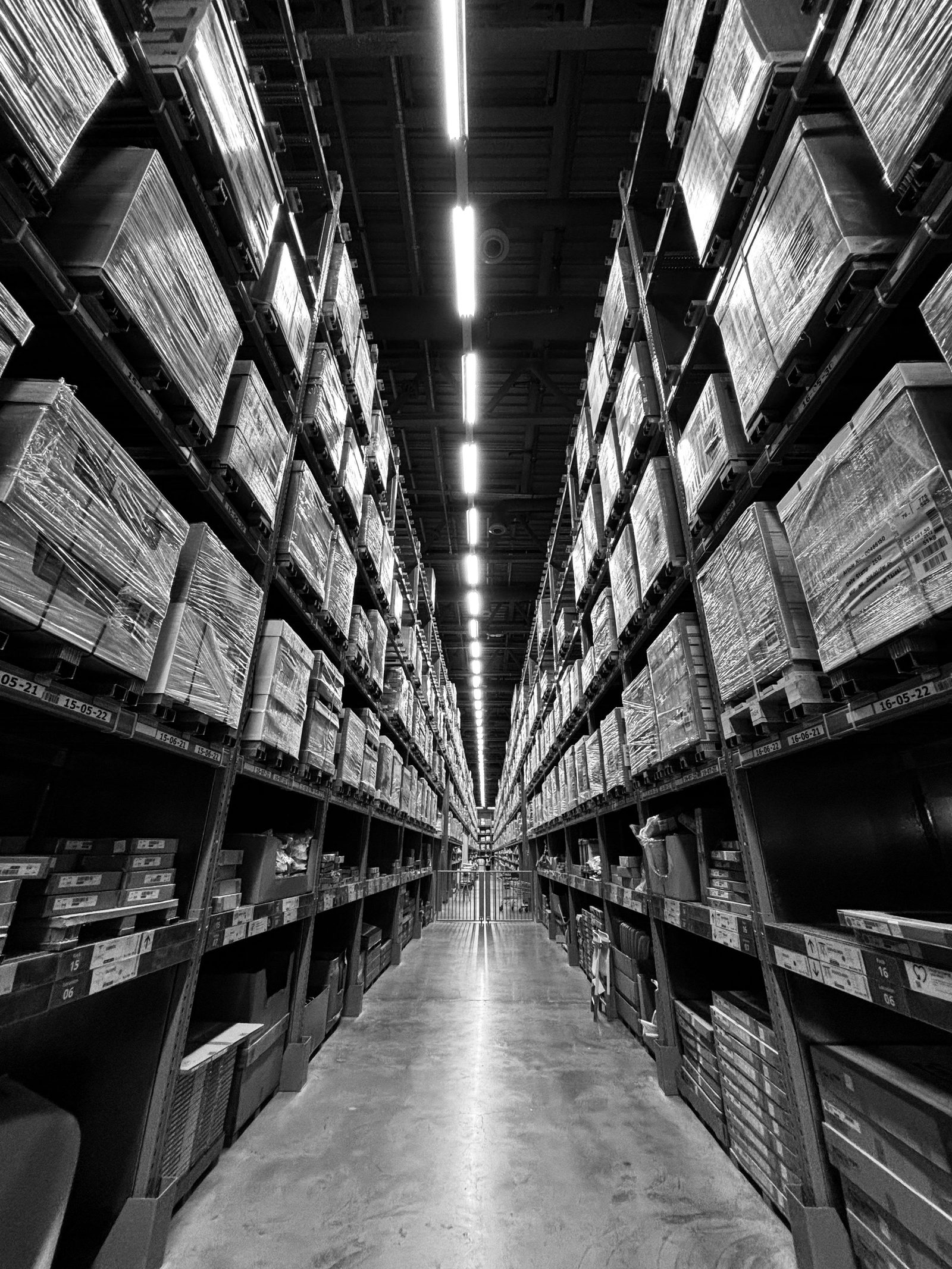
Quick commerce. Ten-minute delivery needs dark stores, and dark stores need space, racking, cold chain, staffing and software. Swiggy’s Q4 FY 2025 letter to shareholders reported 1,021 active Instamart dark stores in 124 cities at the end of March 2025, covering about 4 million square feet, up 62 per cent in a single quarter. Every square foot of that was leased, fitted, chilled and stocked by someone. The second-order market is the landlord, the racking maker, the refrigeration contractor and the software vendor, and it grew 62 per cent in a quarter because one customer did.
AI. In India the shovels are less often chips and more often the work around the model: labelled data in Indian languages, evaluation, integration into the systems an enterprise already runs, and the cloud bill optimisation that a 50 per cent gross margin makes urgent. These are services businesses at first, and the ones that become products are those that do the same job for many AI companies at once.
The shakeout problem
The first-order founder worries about competition. The second-order founder has a different worry, and it arrives later. Booms end in consolidation: most of the funded companies fail or are bought, and the survivors take most of the volume. For the supplier this does two things at once. The number of customers falls, often to a fifth or less of the peak. And the customers that remain are large enough to negotiate, to build in-house or to run a tender between three suppliers. The supplier that had four hundred small customers at the peak can have eighty afterwards, three of whom are most of its revenue and all of whom want a lower price.
The arithmetic is not always bad. If the survivors keep most of the dead customers’ volume and the category keeps growing, revenue can hold or rise through the shakeout. What changes for certain is concentration and bargaining power. A supplier that planned for the shakeout priced in a way the survivors could not easily cut and kept enough customers outside the wave that no single buyer decides its year. The figure models one wave; move the survival rate and the price cut and watch the share held by the top three.
Sell to the problem every survivor will still have, not to the survivors you hope will win.
How to pick the shovel worth selling
It solves a problem that does not depend on which company wins. Shipping, returns, collections and compute are needed by every survivor. A feature that helps one business model and not another is a bet on the first-order race, which is the bet the shovel seller was trying to avoid.
It is priced on usage that survives consolidation. A per-order or per-shipment price follows the volume to whoever ends up with it. A per-seat or per-brand price falls with the customer count. When ten customers become two, usage pricing keeps the revenue; account pricing loses it.
It has customers outside the wave. The D2C returns tool that also serves marketplaces and offline retailers, the dark-store racking maker that also fits pharmacies, the evaluation service that also tests conventional software. Each is less exciting at the peak and much safer afterwards.
It gets better with every customer. A supplier that sits under thousands of companies sees patterns none of them can see: which pin codes return, which payment modes fail, which models drift. If that data improves the product for the next customer, the shovel has become a moat, and the survivors cannot easily replace it with an in-house team.
A worked example: returns in Indian D2C
Returns before delivery, known as return to origin, are one of the costliest problems a D2C brand has, and they are concentrated in cash-on-delivery orders. Unicommerce’s report puts the return rate on cash-on-delivery orders at 58 per cent in the festive quarter against under 15 per cent for prepaid orders, and shows brands that made operational changes cutting their rate from 39.2 per cent in November 2025 to 21.0 per cent by March 2026. A team that sells a service to cut return-to-origin, by scoring each order before dispatch, nudging buyers to prepay and confirming addresses, is selling a shovel.
Run the tests. The problem exists for every brand that ships cash-on-delivery, whichever brands win: pass. Price it per order scored, not per brand: then when a hundred brands consolidate into twenty larger ones, the orders are still scored. Sell it to marketplace sellers and offline retailers who ship to customers as well: the share from D2C falls below half within two years. Use every order scored to improve the score for the next: the model learns which pin codes, times and payment modes fail. That company can sit through a D2C shakeout and come out larger. The same team pricing per brand, selling only to venture-funded brands, would watch its customer count fall with the funding.
A quarterly wave check
Once a quarter, write five numbers: customers this quarter and at the peak, the share of revenue from the top three customers, the share from customers outside the wave, the share priced on usage, and the funding raised in your customers’ category over the last two quarters from public trackers. Falling funding is the shakeout arriving before it shows in your own numbers. If the top three pass 40 per cent of revenue, or the share outside the wave is under a quarter, the next two quarters of sales effort belong outside the wave. The [why-now lesson](/library/why-now-timing-argument) explains how waves open; this check is for the day they start to close.
Figures were checked in October 2026 against the sources below. The worked example is illustrative. Nothing here is investment advice.
Sources
- NVIDIA, NVIDIA Announces Financial Results for Fourth Quarter and Fiscal 2025, 26 February 2025
- Martin Casado and Matt Bornstein, The New Business of AI (and How It’s Different From Traditional Software), Andreessen Horowitz, 16 February 2020
- Unicommerce, The New D2C Playbook: Insights from April 2026 (India D2C report)
- Swiggy Limited, Q4 FY2025 Shareholder Letter, May 2025