पाठशाला Pathshala · मन Man, The founder · Lesson 27 · Scale
The second-time founder: what to keep and what to unlearn
Experience is an advantage only when it is sorted. Some lessons from the first company are principles, some belonged to its market and stage, and some are scars that will mislead.
Pathshala, The Founder Library · 11 October 2026 · 7 min read

A second-time founder starts with more than the first time: a network, a reputation, a bank balance and a head full of lessons. The lessons are the dangerous part. Some are principles that will save years. Others belonged to a market, a stage or a moment that no longer exists, and they will be applied with the confidence of experience to a company they do not fit.
This lesson is a method for sorting them. It begins with what the evidence says about second attempts, then divides a founder’s experience into three kinds of lesson and ends with a written audit to run before the new company is a few months old. It applies whether the first company was sold, shut or is still running without its founder.
What the evidence says about second attempts
Experience does help, on average. A study of American venture-backed founders by Paul Gompers, Anna Kovner, Josh Lerner and David Scharfstein, Skill vs. Luck in Entrepreneurship and Venture Capital, found that founders whose previous venture had succeeded had about a 30 per cent chance of success in their next venture, against about 18 per cent for first-time founders and 20 per cent for founders whose previous venture had failed. Success there meant going public or filing to, a narrow measure, and the paper weighs how much of the gap is skill rather than luck.
Two things follow. First, a previous failure did not, on that evidence, make a founder much better than a first-timer. What carried forward was something about founders who had already built a success, which suggests that lessons matter less than the judgement that produced them. Second, age is no obstacle. A study of US firms by Pierre Azoulay, Benjamin Jones, J. Daniel Kim and Javier Miranda, Age and High-Growth Entrepreneurship, found that the mean founder age of the fastest-growing one in a thousand new ventures was 45. A founder starting again in their forties is in good company.
Three kinds of lesson: principles, context and scars
Every lesson from the first company belongs to one of three kinds. Principles are true of companies in general: they would have held in a different market and a different decade. Context is true of that company: its customers, its channel, its price point, its stage and the money available when it raised. Scars are rules made after one painful event: a co-founder who left, a hire who failed, a round that collapsed. Scars feel like principles because they hurt like them. They are often a sample of one.
The test for each lesson is a single question: would this have been true if the company had been in a different market, at a different stage, with different people? If yes, it is probably a principle. If it depended on the market or the stage, it is context. If it rests on one event and the founder still feels it in the stomach, it is a scar, and it deserves examination rather than obedience.
What usually transfers
The lessons that survive the test tend to be about people, money and conduct. Judging people: how to run a reference call, the signs of a hire who will not work out and the cost of waiting to act on them. Cash discipline: knowing the [runway](/library/runway-how-many-months-you-really-have) every month and cutting before the bank forces it. Speed of decision: the habit of separating [reversible from irreversible decisions](/library/decisions-reversible-irreversible-how-fast) and moving fast on the first kind. Honesty with investors and the board: telling bad news early. The machinery: how a round closes, what a data room needs, how a board meeting runs, how compliance accumulates. And the founder’s own operating manual: what time of day they think best, what drains them and what early signs of strain look like.
The network transfers too, but with a caveat. The people who backed or worked for the first company will take the second founder’s call. That is valuable and also a trap: early customers who buy out of loyalty, investors who fund out of familiarity and hires who join for the founder rather than the problem can all hide the signal that a first-time founder would have had to face.
What usually has to be unlearned
The commonest second-company mistake is to start where the first company ended. A founder who last ran a team of two hundred knows how a company of two hundred works, and tries to build one: a VP of sales before the product sells, a polished brand before ten customers, processes for problems that do not yet exist and a large round because raising is now easy. Each is a good answer to a question the new company is not yet asking.
Paul Graham’s Do Things that Don’t Scale describes the work every company needs at the start: the most common unscalable thing founders do is recruit users manually, and they should take extraordinary measures to make those early users happy. A second-time founder has usually not done that work for years. It has to be done again, personally, and it is often the part that feels beneath an experienced founder. It is not. It is where the new company’s context is learned.
Other context that rarely carries over: the channel that worked last time, which may now be saturated or irrelevant to the new customer; the price and sales motion of the old market; the org chart; and the playbook for scale. Graham’s later essay Founder Mode argues that even the conventional advice for running a large company, hire good people and give them room, can fail founders. If advice about scale can be wrong at scale, a remembered version of it is even less reliable at the start of a new company.
Keep the principles, drop the context and examine the scars before you obey them. The first company taught you how to learn; the second has to be learned again.
The scars, examined
Scars are the hardest lessons to see because they arrive with feeling attached. Never have a co-founder again, after a painful separation. Never raise venture money again, after a board fight. Never hire friends, after one did not work. Always keep control, after a down round. Each might be right. Each might also be a rule derived from one person, one investor or one bad year, now applied to a different situation.
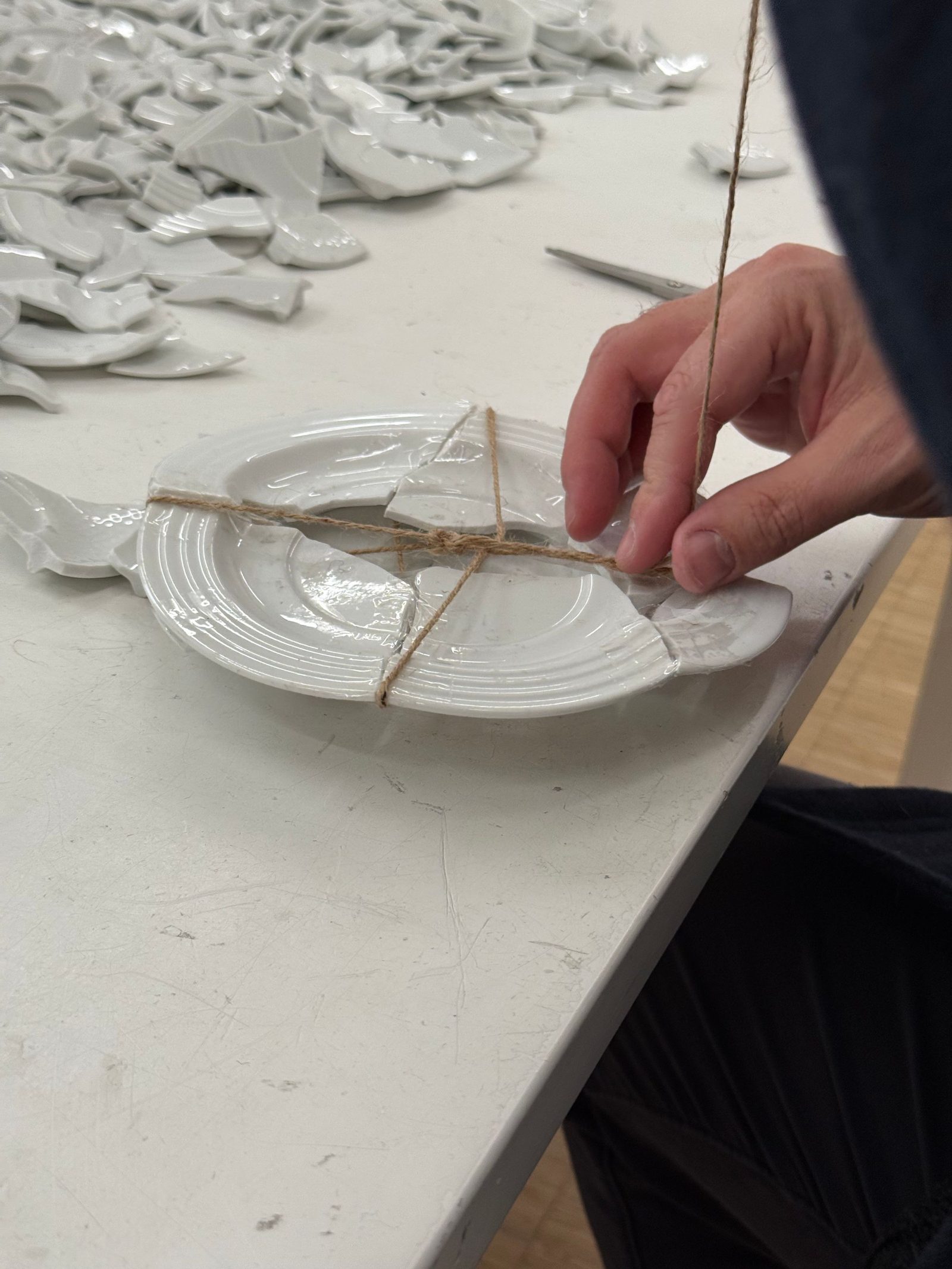
Examine each scar in writing. What happened, specifically? What would have prevented it: the rule you formed, or a narrower one, such as a [co-founders’ agreement](/library/cofounders-agreement-what-it-must-contain) with vesting rather than no co-founder at all? What is the cost of obeying the rule in the new company? The narrow version of a scar is usually a principle. The broad version is usually a fear. If an old event still brings back poor sleep, intrusive memories or a heavy mood, that is worth talking through with a counsellor or doctor, not just a co-founder; Tele-MANAS answers free on 14416 at any hour.
Pace, family and the second decade
The second company usually starts at a different point in life. There may be children, ageing parents, a health condition the first company created or revealed, and a spouse who remembers the first company’s worst years. Those facts are not obstacles; they are the new context, and a founder who ignores them repeats the first company’s mistakes in the one area where repeating them costs most. Discuss the new company at home before it starts, with the same honesty the [lesson on the Indian family](/library/indian-family-and-the-founders-decision) recommends for the first. Decide the hours, the money at risk and the signals that would make you change course, and write them down.
Experience should make the pace saner, not harder. A founder who knows what matters can work fewer hours on more important things. If the second company is beginning to feel like the worst year of the first, that is a signal to act on, not a test of resolve.
The transfer audit
Run this in the first month of the new company and again at month six. Write down twenty lessons from the first company, one line each, without editing. Tag each one P for principle, C for context or S for scar, using the single test question. For every C, write what you would need to learn to know whether it holds in the new market, and who to ask. For every S, write the narrow version, and decide whether you will follow that one instead. For every P, write how it will show up in the new company’s weekly routine, or it will not survive the first busy quarter. Share the list with a co-founder or a trusted peer who did not live the first company, because they will spot the scars you have mislabelled as principles. Then put the list away and go and recruit the first ten users by hand.
The studies cited are of US founders and firms; treat their numbers as direction, not destiny.
Sources
- Paul Gompers, Anna Kovner, Josh Lerner and David Scharfstein, Skill vs. Luck in Entrepreneurship and Venture Capital: Evidence from Serial Entrepreneurs, NBER Working Paper 12592, October 2006 — Introduction: 30 per cent chance of success for founders with a prior success, 18 per cent for first-time founders, 20 per cent after a prior failure; success defined as going public or filing to.
- Pierre Azoulay, Benjamin Jones, J. Daniel Kim and Javier Miranda, Age and High-Growth Entrepreneurship, NBER Working Paper 24489, April 2018 — Mean founder age of 45.0 among the fastest-growing 1 in 1,000 new ventures.
- Paul Graham, Do Things that Don’t Scale, July 2013
- Paul Graham, Founder Mode, September 2024
- Press Information Bureau, Update on National Tele Mental Health Programme (Tele-MANAS), 4 April 2025 — Toll-free 14416, 24x7.