स्तम्भ Stambh · Swanīti
Ten Minutes Before the Day Gets a Vote
Anything you leave for the evening you have given to the evening. How one person actually keeps a condition, with the only habit study worth quoting.
Nikhil Sharma · स्वनीति Swanīti · 27 May 2026 · 4 min read
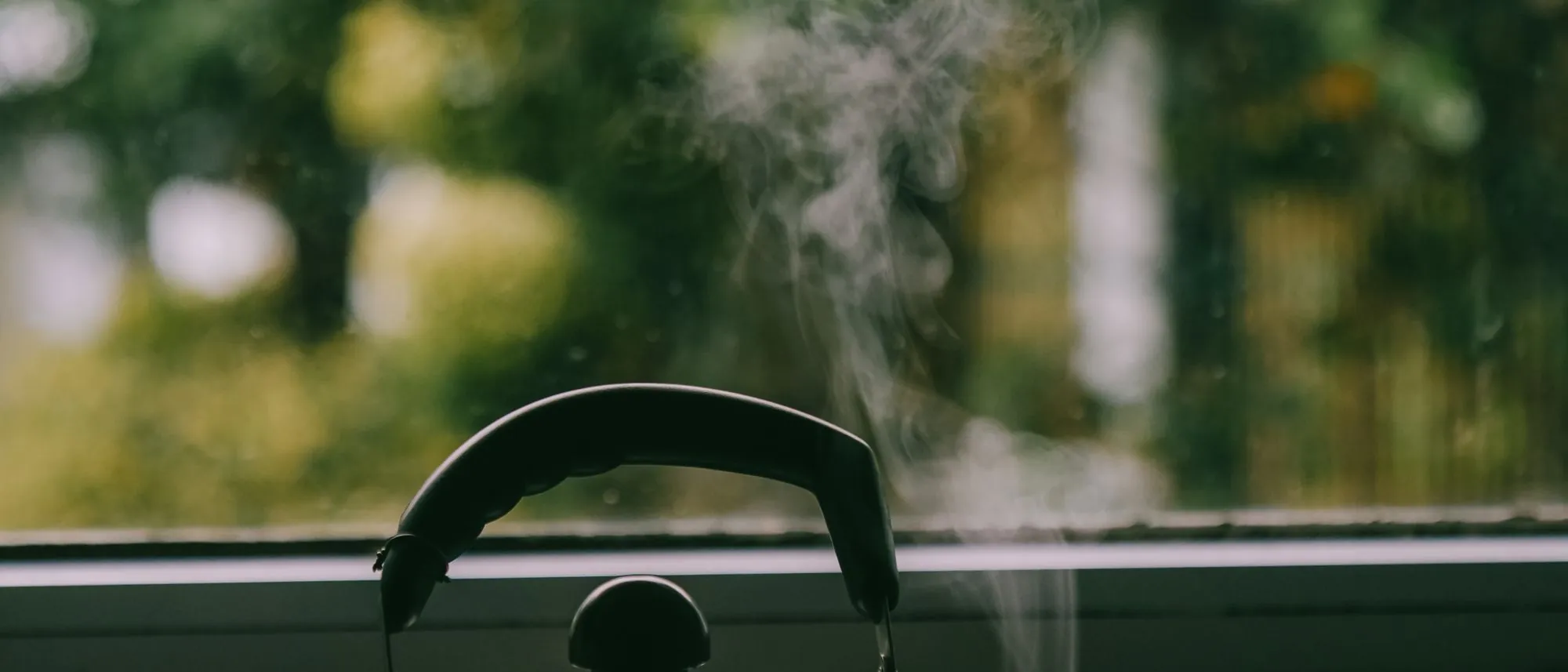
The habits of mine that stayed are the ones I put before the day could vote on them.
Everything I ever planned for the evening I eventually gave to the evening. The walk after work. The reading after dinner. The call to the friend once the house was quiet. Each of them survived about three weeks and then met a late meeting or a tired child or a cricket match, and once a habit has lost to the evening three times it does not come back. Not because I am weak. Because the evening has more votes than I do.
I have argued in a sentence already that happiness is an operations problem — six conditions to be maintained rather than a feeling to be found. This column is the same argument at the scale of one person on one morning. It is the only scale at which the argument is ever actually tested.
The one study worth quoting
Everybody has heard that a habit takes twenty-one days. The number has a source and the source is not a study. Maxwell Maltz, a plastic surgeon, wrote in the preface to Psycho-Cybernetics in 1960 that it usually requires a minimum of about twenty-one days to effect any perceptible change in a mental image. He was describing how long his patients took to get used to a new nose. The self-help trade dropped the minimum and the nose and kept the number. The study worth reading is Lally and colleagues in the European Journal of Social Psychology in 2010. Ninety-six volunteers each chose one daily behaviour and reported on it for eighty-four days. Among those whose data could be modelled, the median time to reach automaticity — the point where the thing happened without a decision — was 66 days. The range was 18 to 254.
Two things in that paper matter more than the headline. The first is the range. Some habits take under three weeks and some take the better part of a year, and the ones that take a year are the ones with more friction in front of them. The second is that missing a single day made no measurable difference. The habit did not reset. It barely noticed.
Read those together as an operator and the design writes itself. Cut the friction so you sit near the eighteen-day end rather than the 254. Stop treating one missed morning as a failure, because the data says it is not one. And give the thing somewhere between two and nine months before you judge it, which almost nobody does, which is why almost nobody has it.
Anything you leave for the evening you have given to the evening.
Ten minutes, before the phone, one person
The design has three parts and none of them is clever. Decide the night before, in one line, on one thing under ten minutes. Not three things. One. Walk to the end of the road and back. Sit in the sun with the tea for the length of the tea. Deciding is cheap and it is also where most people stop, so do not congratulate yourself for it.

Do it before the day has a vote. That means before the phone, which is the day’s ballot box. Attach the thing to something already fixed — the kettle, the school run, the car park you refuse to use. A habit with its own slot in the morning is a habit competing for the morning. A habit attached to the kettle happens when the kettle does.
Tell one person. Not an app. A person who will ask on Thursday whether you did it, and to whom you will have to say yes or no out loud. Agree with them beforehand what three missed mornings in a week will cost you. Nothing dramatic. Something that exists, like your Saturday. This is the part the wellness industry removed because it does not scale, and it is the part that makes the other two hold. The companies I run work on the same four words — commit, act, account, consequence — and a morning is the smallest place they fit.
What this will not do
It will not fix a life whose floor has gone. A person who cannot sleep because of money or grief or illness does not need a morning habit and will be insulted by one, and anyone who sells them one is selling the feeling. This is for the person whose floor exists and whose conditions are slipping, which is most of the people I employ and most of the people I know.
It will also not feel like anything for about two months. That is the Lally finding in plain terms. The feeling arrives after the condition has been kept long enough to stop being a decision. If you need to feel it first you will stop at day nineteen, and the evening will have won again.
Ten minutes. Before the phone. One person who asks. Then wait.
Written in Gurugram on 27 May 2026, a week before the long essay on happiness as an operations problem. The third column towards it and the only one that can be checked on a Thursday.
Sources: Lally, van Jaarsveld, Potts and Wardle, How are habits formed, European Journal of Social Psychology 40(6), 2010, as summarised with the modelling caveats by The Behavioral Scientist: 96 participants, 84 days, median 66 days to automaticity among the 39 whose data met the modelling criteria, range 18 to 254, one missed day making no material difference. Maxwell Maltz, Psycho-Cybernetics, Prentice-Hall, 1960, preface, for the twenty-one days, as quoted and traced by UCL’s Health Behaviour Research Centre, 29 June 2012.