विमर्श Vimarsh · Samājnīti
Happiness Is an Operations Problem
Every tradition that took happiness seriously ended in the same inconvenient place. It is not a feeling to be summoned. It is a set of conditions to be maintained.
Nikhil Sharma · समाजनीति Samājnīti · 3 June 2026 · 18 min read

I run AnandBodh, a wellness venture, and this essay is the argument it is built on. Read it knowing that.
Six conditions
Nobody I know who is happy got there by thinking about it.
They got there by sleeping. By walking somewhere most days. By standing in sunlight before ten in the morning. By having one person who knows what their week was actually like. By doing work that produced something they could point to by Friday. And by not carrying a debt they had stopped mentioning.
Six conditions. I have watched them for twenty years in founders, in staff and in my own house, and I have never found a seventh that mattered as much or a sixth I could drop. When all six hold, the person is mostly all right whatever the quarter did. When two go, the person is in trouble whatever the quarter did. The feeling we call happiness turns out to sit downstream of a maintenance schedule.
I did not pull the six out of the air and I will give one line of evidence for each. Sleep: a meta-analysis of 21 longitudinal studies found people with insomnia roughly twice as likely to go on to develop depression. Walking: a pooled analysis of 47,471 adults across fifteen cohorts found the risk of death kept falling with every extra step, up to about 6,000 to 8,000 a day for the over-sixties and 8,000 to 10,000 for everyone younger. Daylight: in more than 400,000 UK Biobank participants each extra hour spent outdoors in daylight came with lower odds of lifetime depression, less low mood and greater ease of getting up. One person who knows you: the Harvard Study of Adult Development, which has followed its men since 1938, says good relationships keep us happier and healthier, and I come back to it below. A result you can point to: Amabile and Kramer read nearly 12,000 diary entries from 238 people on 26 teams and found the single most important contributor to a good inner work life was simply making progress on meaningful work. The debt: a systematic review of 65 papers found people carrying unsecured debt about three times as likely to have a mental disorder as people who were not.
That is an unfashionable thing to say. We prefer happiness as a mystery, or a mood, or a reward for holding the right philosophy. I am going to argue that it is a logistics problem. The conditions are known. The failure is in delivery. And delivery is the one thing I actually know how to do.
Happiness is not a feeling to be summoned. It is a set of conditions to be maintained.
What the old books say when you read them as manuals
Every tradition that took happiness seriously ended in the same inconvenient place. Not at a feeling. At a routine.
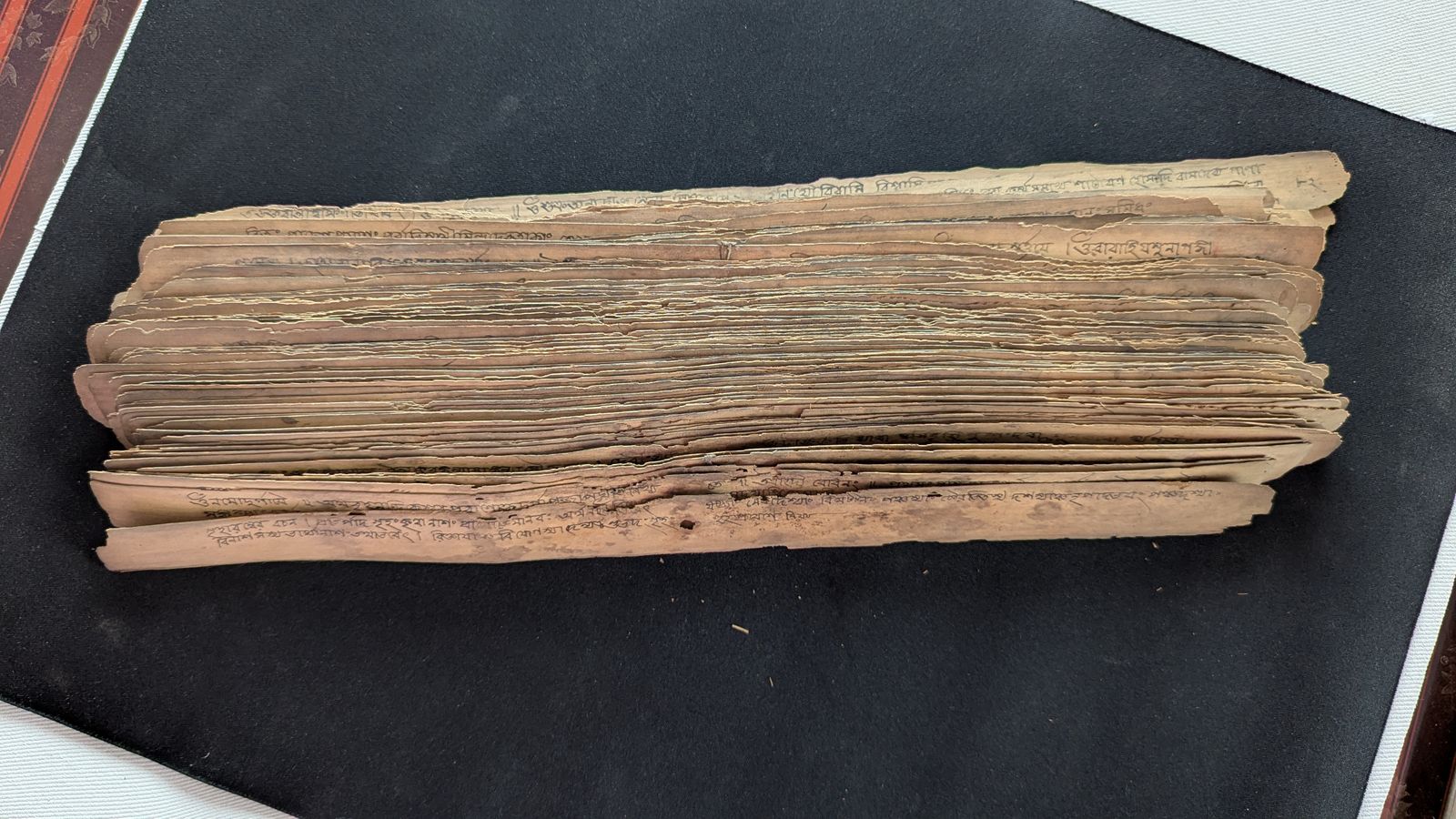
The Gītā is the obvious case and the most misread. People go to it for a philosophy and skip the verses that read like a schedule. The Gītā never promises joy. It describes the conditions under which joy stops being blocked.
In the sixth chapter it gets practical to the point of being blunt.
युक्ताहारविहारस्य युक्तचेष्टस्य कर्मसु । युक्तस्वप्नावबोधस्य योगो भवति दुःखहा ॥
For one who is measured in food and in rest, measured in effort at work, measured in sleep and in waking — for that person yoga becomes the destroyer of sorrow.
Food. Rest. Effort. Sleep. Waking. That is not a philosophy. That is a maintenance log. The verse before it says yoga is not for the one who eats too much or too little, who sleeps too much or stays awake too long. Krishna is handing Arjuna a schedule.
And in the second chapter there is the line I would put above the door of every wellness business in the country.
नास्ति बुद्धिरयुक्तस्य न चायुक्तस्य भावना । न चाभावयतः शान्तिरशान्तस्य कुतः सुखम् ॥
The unsteady have no clear mind. Without a clear mind there is no settling. Without settling there is no peace. And for the one without peace — where is happiness?
Aśāntasya kutaḥ sukham. Where is happiness for the unquiet. It is a chain of conditions, each resting on the one before, and the question at the end is not rhetorical. It is an audit. You cannot have the last link without the first.
The Buddha was blunter still. The Dhammapada ranks the gains.
आरोग्यपरमा लाभा सन्तुट्ठिपरमं धनं । विस्सासपरमा ञाति निब्बानं परमं सुखं ॥
Health is the highest gain. Contentment the highest wealth. One you can trust is the best of kin. Nibbāna is the highest happiness.
Read the first three as a list and notice what they are. A body that works. Wanting what you have. Someone who knows you. The Buddha put the conditions before the transcendence, and in that order. His eightfold path is a checklist with eight items on it. Nobody has ever mistaken it for a feeling.
The Stoics ran a daily operating procedure and said so. Marcus Aurelius opens the second book of the Meditations with a morning briefing: Begin the morning by saying to thyself, I shall meet with the busy-body, the ungrateful, arrogant, deceitful, envious, unsocial. That is an emperor pre-loading his day the way a pilot reads a checklist. Seneca, in the third book of De Ira, supplies the evening half of the procedure. Anger will abate and become more temperate if it knows that it must come before a judge every day. Then the audit itself, in James Romm’s translation: When the daylight has faded from view, and my wife, who knows well this custom of mine, keeps quiet, I become an inspector and reexamine the course of my day, my deeds and words; I hide nothing from myself, I omit nothing. Morning brief. Evening review. Two thousand years before anyone sold a planner.
Aristotle closes the case in the seventh chapter of the first book of the Nicomachean Ethics, in Ross’s translation: human good turns out to be activity of soul in accordance with virtue. And then the line every retreat should print on its brochure: For one swallow does not make a summer, nor does one day; and so too one day, or a short time, does not make a man blessed and happy. An activity, not a state. Something you do, and keep doing. Not something you have.
Five traditions. Most of them never met. The same answer. The feeling is downstream. The conditions are the work.
The Gītā does not promise joy. It lists the conditions under which joy stops being blocked.
The numbers nobody puts in the quarterly review
Here is what the conditions look like in India when somebody counts them. Four figures, each from a source I opened myself, none rounded past what the source states.
Read them as a maintenance report and not as a health story. Half the adult country does not move enough, and the share has more than doubled since 2000. One adult in nine has diabetes and one in seven is on the way. The average worker is at it for nearly forty-seven hours a week and half the workforce is over forty-nine, which puts India second in the world for long hours. And fifteen crore people need active care for their minds, most of whom are not getting it. Movement. Body. Load. Mind. Four of my six conditions measured at the scale of a nation, and every one of them is red.
Then the figure that matters most to this essay, because the Government of India published it. The Economic Survey 2024-25 carried a section on mental wellbeing and the workplace, built on data from the Sapien Labs Centre for Human Brain and Mind covering over 1.5 lakh Indians. Paragraph 11.75 says it plainly: individuals who spend 12 or more hours at a desk have distressed/struggling levels of mental well-being, with a mental well-being score approximately 100 points lower than those who spend less than or equal to two hours at a desk. Three paragraphs later it adds that better workplace culture and family relationships are associated with two to three fewer days lost per month at work.
Two to three days a month. Per person. That is not a wellbeing statistic. That is a capacity statistic, and the finance ministry put it in the same document as the growth forecast. Deloitte had put a price on the same thing two years earlier. Its 2022 survey of 3,995 Indian employees found 80 per cent reporting a mental-health symptom in the previous year and costed the loss to employers at about 14 billion dollars a year — absence, presence without function, and people leaving.
So the state has measured it. A consultancy has priced it. And I cannot name one Indian company with over five thousand people that reports sleep, recovery or load in the same quarterly review as revenue. Which is strange. The review is where the money is, and the money is what these numbers are about.
The finance ministry put the desk hours in the same document as the growth forecast. The companies have not caught up with their own government.
Logistics, not philosophy
We have spent two centuries treating happiness as a philosophical question. A thing to be understood. The bookshops are full of the understanding.
Daniel Kahneman spent a career on how people judge their own lives and arrived at a sentence he called the focusing illusion: Nothing in life is as important as you think it is, while you are thinking about it. Read that against the whole self-help shelf. The shelf is a machine for making you think about happiness. Which, by Kahneman’s finding, is roughly the moment it stops being available.
Robert Waldinger directs the Harvard Study of Adult Development, which has followed its men since they were undergraduates in 1938, and his summary of the whole thing is one line: the clearest message that we get from this 75-year study is this: good relationships keep us happier and healthier. Not a feeling. A condition. The one on my list called someone who knows you.
Here is what an operator sees when he reads those two together. The problem is not knowledge. Krishna knew. The Buddha knew. Marcus knew. Kahneman and Waldinger confirmed it with data. The problem is that none of it arrives in front of a person on the morning they need it, in a form that costs them under ten minutes.
That is a delivery failure. Delivery failures are what I fix.
I run one method and it is four beats — Commit. Act. Account. Consequence. It is how I run companies. Run it on a day instead of a quarter and it is how a person keeps the six conditions.
Most wellness advice runs the first beat and stops. It commits you. It does not act for you and nobody accounts and nothing follows. Which is why the gym is full on the third of January and empty by the twentieth, and everybody treats that as human nature rather than as a system with three beats missing.
Ten minutes, at the right hour
The six conditions are not spread evenly across a day. Each has an hour where it is cheap and an hour where it is already lost.

Sleep is decided at eleven at night, not at seven in the morning. Sunlight is decided before ten. Movement is cheapest attached to something you already do — the stairs you walk past, the call you could take on foot. The visible result is decided by what you put first at the desk, before the inbox gets a say. The person who knows you is an evening, not a message. And the debt is a ledger you open once a week, on the same day, so it cannot hide.
Lay the six on a day and the operations problem shows itself. Most of them are decided before eight in the morning or after nine at night — the two windows no workplace wellbeing programme touches, because nobody is at work. The programme runs a webinar at three in the afternoon on the importance of sleep. The sleep was decided sixteen hours earlier by a phone.
So the form has to fit the hour. Under ten minutes. On the morning. Attached to the thing you were already going to do. I have not found a cleverer rule than that and I have stopped looking for one.
What the industry sells, and what it does not
Now the part I owe the reader, because I am in this industry.
The global wellness economy was 6.3 trillion dollars in 2023 by the Global Wellness Institute’s count and is projected to reach nearly 9 trillion by 2028. A market that size is not selling six conditions. Six conditions are cheap. It is selling the feeling.
I will give examples and keep the brands out of it. The retreat that costs a lakh and sends you home to the same bedroom and the same eleven o’clock. The supplement stack sold to a person who walks four thousand steps a day. The gratitude journal sold without the sleep that would make gratitude possible. The detox, a word with no agreed meaning that has nonetheless built an industry. The app that logs your mood every evening with great precision and does nothing whatever about your commute. Each of these produces a feeling. Some of them produce a good one. None of them maintains a condition, and a feeling without a condition under it lasts until Tuesday.
Roughly half the industry is this. I say half because the other half — the sleep researchers, the physiotherapists, the people getting Indians to walk, the clinicians treating the fifteen crore — is doing the real work and does not deserve the company it keeps.
AnandBodh is inside this industry and is subject to the same test. I will apply it below, in public, with a date on it.
A feeling without a condition under it lasts until Tuesday.
What I cannot fix
The nuance that keeps this essay honest is also its hardest sentence.
A person in genuine poverty is not short of a protocol. A person in grief is not short of a protocol. A person with a clinical illness of the body or the mind is not short of a protocol. The six conditions are the conditions of someone whose floor already exists — a roof, a wage, a body that answers, a mind not currently under attack. For everyone else, maintenance advice is a cruelty dressed as help.
The wellness industry’s biggest lie is implying otherwise. It takes the language of the conditions and sells it to people whose problem is the floor. The fifteen crore Indians the National Mental Health Survey says need active intervention are not a market for a morning routine. They need clinicians, and the same survey found the treatment gap for most disorders running from 28 to 83 per cent, and 86 per cent for alcohol use. It found mood and stress disorders two to three times more prevalent in the metros. The cities that buy the most wellness are the cities with the most untreated illness, and the two facts are related. One caveat on the number. That survey ran in 2015-16 and is still the latest complete one. Its successor, NMHS-2, was launched in December 2024 across all 28 states and eight union territories and had not reported when this essay went up, so fifteen crore is a decade old and nobody yet knows which way it has moved.
Loneliness is the hardest of the six because it sits across the line. The World Health Organization’s Commission on Social Connection reported in June 2025 that about one in six people worldwide is affected by loneliness, and linked it to roughly 871,000 deaths a year — about a hundred an hour. Research says it raises the risk of stroke, heart disease and depression. A protocol can give a lonely person a reason to walk to the same park at the same time until a face becomes a name. It cannot give them a family back. I will not pretend it can.
So I state the limit plainly. What follows is for the person whose floor exists and whose conditions are slipping. That is a great many people in this country and almost all of the ones who will read this. It is not everyone. And anybody who tells you his programme is for everyone is selling the feeling.
What AnandBodh is, and the number I do not yet have
AnandBodh — आनंदबोध, the knowledge of joy — exists because I came to believe the shortage is not of wisdom but of delivery. It is a community on the web. A score a person can take in a few minutes to see which of their dimensions is slipping. A movement programme built around the soleus, the deep calf muscle that makes up about one per cent of body mass, after a 2022 study in iScience found that keeping it contracting while seated cut the post-meal glucose spike by 52 per cent and the insulin response by 60 per cent — in fifteen volunteers, under laboratory conditions. Fifteen people in a lab is a reason to look, not a result to sell, and I would rather say that here than on a landing page. And a centre in Jaipur where the work is done in person. I am its marketer and its operator. I am not its clinician and I have never pretended to be. The clinical judgement belongs to doctors who have spent their lives on it, and nothing in this essay or on that platform is a cure for anything. Research says what it says. Our job is to put it in front of a person in a form that fits the hour.
This essay set out to publish one number on AnandBodh’s own retention, honestly, even if it was small. Here is the honest version. I do not yet have a number clean enough to print. The community has been running on a platform that counts sign-ups and does not count whether a person was still doing the thing ninety days later — and a sign-up is the Commit beat with the other three missing. I will not publish the easy number. By 31 March 2027 I will publish the ninety-day retention of everyone who started a programme with us after this essay went up, the method of counting, and the size of the cohort, whatever it says. If it is bad it goes here. That is the Account beat and I am taking it on myself before I ask it of anyone.
The commercial sentence in this essay is that one. AnandBodh feeds on this argument. I would rather say so than have you find out.
The wager
A claim about delivery should be deliverable itself, so here is one with a date on it.
By 31 December 2028, at least one Indian employer with over five thousand people will measure a wellbeing operating metric — sleep, recovery or load — in the same quarterly review as revenue, and say so publicly. Not a wellness week. Not an app allowance in the benefits deck. A number with a trend line in the same document the board reads for the top line, disclosed in an annual report, an investor call or a filing.
Three markers so nobody has to take it on trust. First, the metric is operational — hours, sleep, recovery, load, days lost — and not a satisfaction survey. Second, it is reported at the same cadence as revenue, not once a year in the sustainability section. Third, the company says it in public, and a journalist does not have to find it.
My call, first published 3 June 2026.
If no Indian company has done it by then I was early by more than a decade and the premise of this essay is weaker than I think. The state will have measured it, the consultancies will have priced it, and the companies will still have found it too soft for the room where the money is. I will write that essay and leave this one standing beside it.
And one invitation, because this is the piece that starts it. From here the Samvād begins. The strongest objection to anything published this quarter goes up in the next quarter in the objector’s own words, unedited, with my reply beneath it and not above. If you think happiness is not an operations problem, say so in a thousand words. I will print it.
Keep the day
There is a reason this piece is called what it is.
An operations problem is a solved problem that has not been delivered. The route is known. The parts are known. What is missing is the person who puts the right part in front of the right hand at the right hour and comes back to check. That is the whole of logistics, and it is the whole of this.
You will not think your way to happiness. Kahneman has the data on that. You will not buy it either — I have told you what the industry sells. You will sleep your way there and walk your way there and stand in the sun and finish one thing and tell one person how the week actually went and open the ledger on Sunday. Six conditions. Ten minutes at the right hour. Four beats so it does not stop on the twentieth of January.
Keep the conditions. The feeling knows where you live.
Keep the conditions. The feeling knows where you live.
Nikhil Sharma, writing as Nishkrant Nikhil. Gurugram, 3 June 2026.
Sources: Economic Survey 2024-25, Chapter 11, paragraphs 11.70 to 11.78, for the Sapien Labs data, the 100-point gap at twelve hours and the two to three days lost per month. WHO physical activity factsheet for India, 2024 for 49.4 per cent of adults insufficiently active in 2022 against 22.3 per cent in 2000. ICMR-INDIAB in The Lancet Diabetes and Endocrinology, 9 June 2023, as reported from the study: 101 million with diabetes and 136 million prediabetic from a sample of 1,13,043. ILO working-hours data via Business Standard, 20 September 2024: 46.7 hours a week and 51 per cent over 49 hours. National Mental Health Survey of India 2015-16, summary report, Ministry of Health and Family Welfare: current prevalence 10.6 per cent, nearly 150 million in need of active intervention, treatment gaps and the metro figures. Deloitte survey, 2022 as reported by People Matters, 9 September 2022. WHO Commission on Social Connection, 30 June 2025. Global Wellness Institute, Global Wellness Economy Monitor 2024. Kahneman on the focusing illusion, Edge, 2011. Waldinger in his 2015 TED talk, transcript via NPR. Marcus Aurelius, Meditations 2.1 in George Long’s translation. Seneca, De Ira 3.36, in James Romm’s translation, How to Keep Your Cool, Princeton University Press, 2019, checked against the excerpt reproduced here. Aristotle, Nicomachean Ethics 1.7 in W. D. Ross’s translation. For the six conditions: Baglioni and others, Journal of Affective Disorders 135, 2011, 21 studies, pooled odds ratio 2.60 under the random-effects model; Paluch and others, Lancet Public Health 7, 2022, 47,471 adults in fifteen cohorts; Burns and others, Journal of Affective Disorders, 2021, over 400,000 UK Biobank participants; Amabile and Kramer, The Power of Small Wins, Harvard Business Review, May 2011, with the diary counts as stated in their account of the study; Richardson, Elliott and Roberts, Clinical Psychology Review 33, 2013, 65 papers, odds ratio 3.24. Hamilton, Hamilton and Zderic, iScience 25, 2022 for the soleus study, its 52 and 60 per cent figures, its fifteen-person glucose test and its own stated limits. NMHS-2 launch, News on AIR, 7 December 2024. Gītā 6.17 and 2.66 and Dhammapada 204 from the standard texts.