विमर्श Vimarsh · Lokanīti
India Is Already the Doctor
India performs a large share of the world’s affordable complex surgery and sells it on the one thing nobody should sell. Price. The position it has never claimed is outcome at scale, and the layer that would let it claim that position has not been built.
Nikhil Sharma · लोकनीति Lokanīti · 9 September 2026 · 17 min read
I intend to build IndiaMedica, the trust layer this essay describes. It does not exist yet. Read the essay knowing I would like it to.
The worst thing to sell
India sells surgery the way a discount airline sells seats.
Open any comparison table and the pattern is the same. A heart bypass listed at $123,000 in the United States is listed at $7,900 in India. Thailand is at $15,000. Singapore is at $17,200. Turkey is at $13,900. A hip replacement is $40,364 against $7,200. A knee is $35,000 against $6,600. In four of the five big procedures on the table India is the cheapest country on it. Those are 2021 list prices from a trade body that sells medical travel, so take them as the industry’s own claim and not as clinical truth. The shape is not in dispute. India is the lowest number in the column.
The same body publishes a Medical Tourism Index. On the 2020-21 edition India is tenth. Canada is first at 76.47. Singapore is second at 76.43. Japan, Spain, the United Kingdom, Dubai, Costa Rica, Israel and Abu Dhabi come next. India sits at 69.80, below two Gulf cities that import most of their surgeons. That edition is the third, and as I write it is still the latest the publisher lists, so the ranking is five years old and nobody has issued a newer one.
Cheapest on price. Tenth on everything else. That is not a ranking. It is a diagnosis.
I have spent twenty years pricing services in a country that undercharges for them, and I have watched what selling on price does to the seller. It attracts the buyer who leaves the moment somebody is cheaper. It teaches the seller to cut rather than to improve. And it invites the next country in the queue, because price is the only advantage a competitor can copy by deciding to. Nobody can copy a surgeon who has done two thousand valve repairs. Any country with a weak currency can copy a discount.
Price is the worst thing to sell. It is the only advantage a competitor can copy by deciding to.
This essay is about the thing India has and has never sold, and about the layer that has to exist before it can be sold. My lens is declared once and it is राष्ट्रहित Rāshtrahit, India’s interest. I will also declare an intention. I would like to build that layer, and I will say so plainly when the essay reaches it rather than let a reader discover it.
What the others sell
Every serious medical destination sells one thing and the thing is never the price.
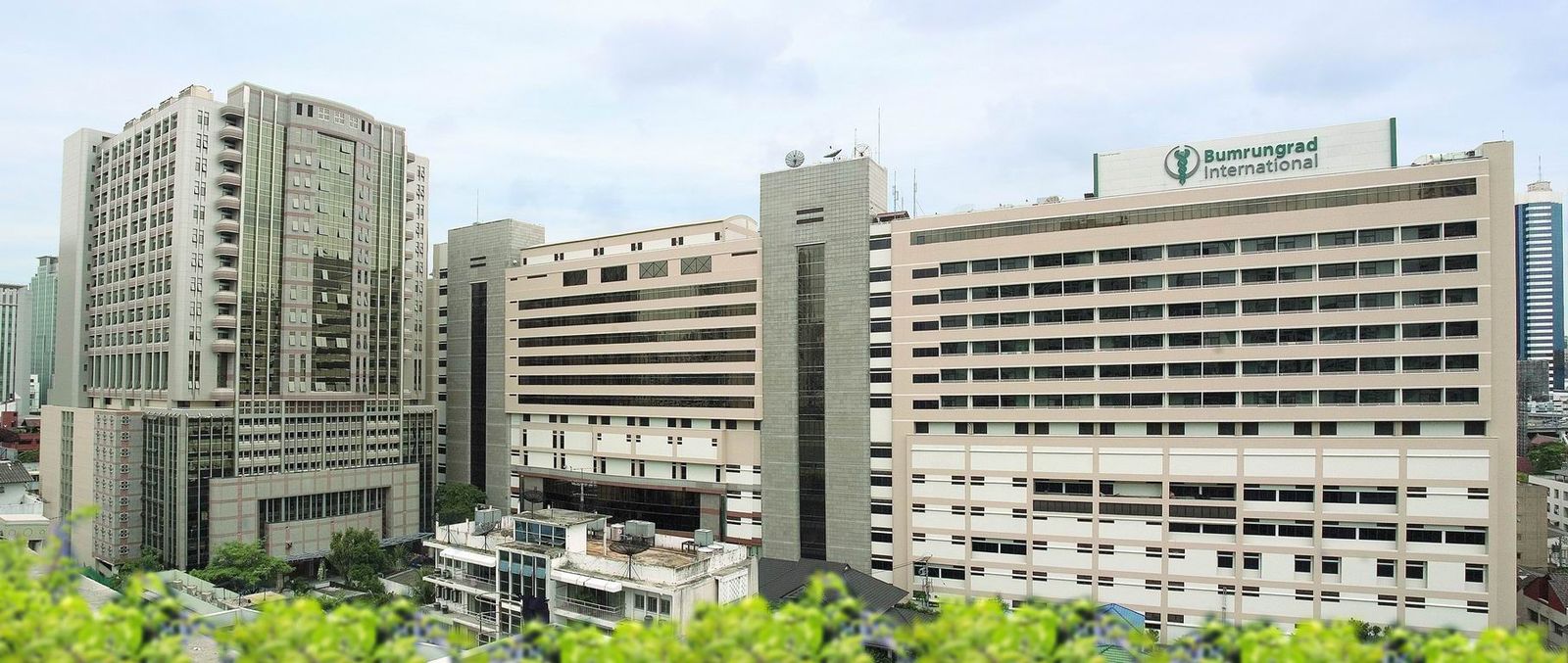
Thailand sells wellness and hospitality. Its flagship hospitals are run like hotels and the patient’s spouse is treated as a guest rather than as a visitor to be tolerated. Turkey sells hair, teeth and eyes. By its own statistical office it received 1.4 million health tourists in 2023 and earned $2.3 billion from them, up from $1.9 billion the year before. Most of those patients came for something that was never going to kill them, were finished inside a week and had a holiday attached. Singapore sells precision, the sense that nothing in the building has ever been improvised. Dubai and Abu Dhabi sell proximity and polish to the Gulf and East Africa, and they sit above India on the same index that puts India tenth.
None of them is the cheapest. None of them is trying to be. Each decided what the patient should believe about it before the patient read a price, and the price then confirms the belief instead of being the belief.
India has not decided. Ask ten families in Lagos or Tashkent or Dhaka what India is for in medicine and you will get the honest answer. It is where you go when you cannot afford anywhere else. That is a real position and it fills hospitals. It is also the position with the shortest life, because it is held at the pleasure of the next cheaper country.
The second thousand
Here is the thing India could own and nobody has claimed.
In 1979 three researchers at Stanford, Harold Luft, John Bunker and Alain Enthoven, published a paper in the New England Journal of Medicine with a blunt title. Should operations be regionalized? They looked at close to 1,500 hospitals and twelve procedures and found that for open-heart surgery, vascular surgery, prostate resection and coronary bypass the death rate fell as the hospital’s volume rose. The paper opened a field. Nearly fifty years of work since has complicated the detail and left the direction alone. For the hard procedures, the place that does more of them loses fewer patients.
This is not a Western discovery. Charaka wrote it down first.
श्रुते पर्यवदातत्वं बहुशो दृष्टकर्मता । दाक्ष्यं शौचमिति ज्ञेयं वैद्ये गुणचतुष्टयम् ॥
Clarity in what has been learnt. Having seen the work done many times. Dexterity. Cleanliness. Know these as the four qualities of a physician.
Four qualities. The second is the whole of the modern literature in three words. बहुशो दृष्टकर्मता, bahuśo dṛṣṭakarmatā. Having seen the work done many times. It sits in a text that is at least two thousand years old, in the chapter that lists the four pillars of treatment and puts the physician at the head of them. The physician is not the one who has read the most. He is the one who has seen it most.
Atul Gawande, a surgeon who writes about surgery better than anyone alive, put the same thing in a sentence that any operator will recognise from a trade that is not medicine.
Practice is funny that way. For days and days, you make out only the fragments of what to do. And then one day you’ve got the thing whole. Conscious learning becomes unconscious knowledge, and you cannot say precisely how.
The hospital Gawande went to when he wanted to see the limit of that idea is a small one outside Toronto called Shouldice, and it does one operation. Hernias. By its own account to a Scottish parliamentary committee in 2022 it performs about 6,800 of them a year with ten surgeons, each of whom does six to seven hundred. Its lifetime recurrence rate is under two per cent. A general surgeon elsewhere might do a few dozen in a year. Shouldice is not cheap and does not say it is. It says the number.
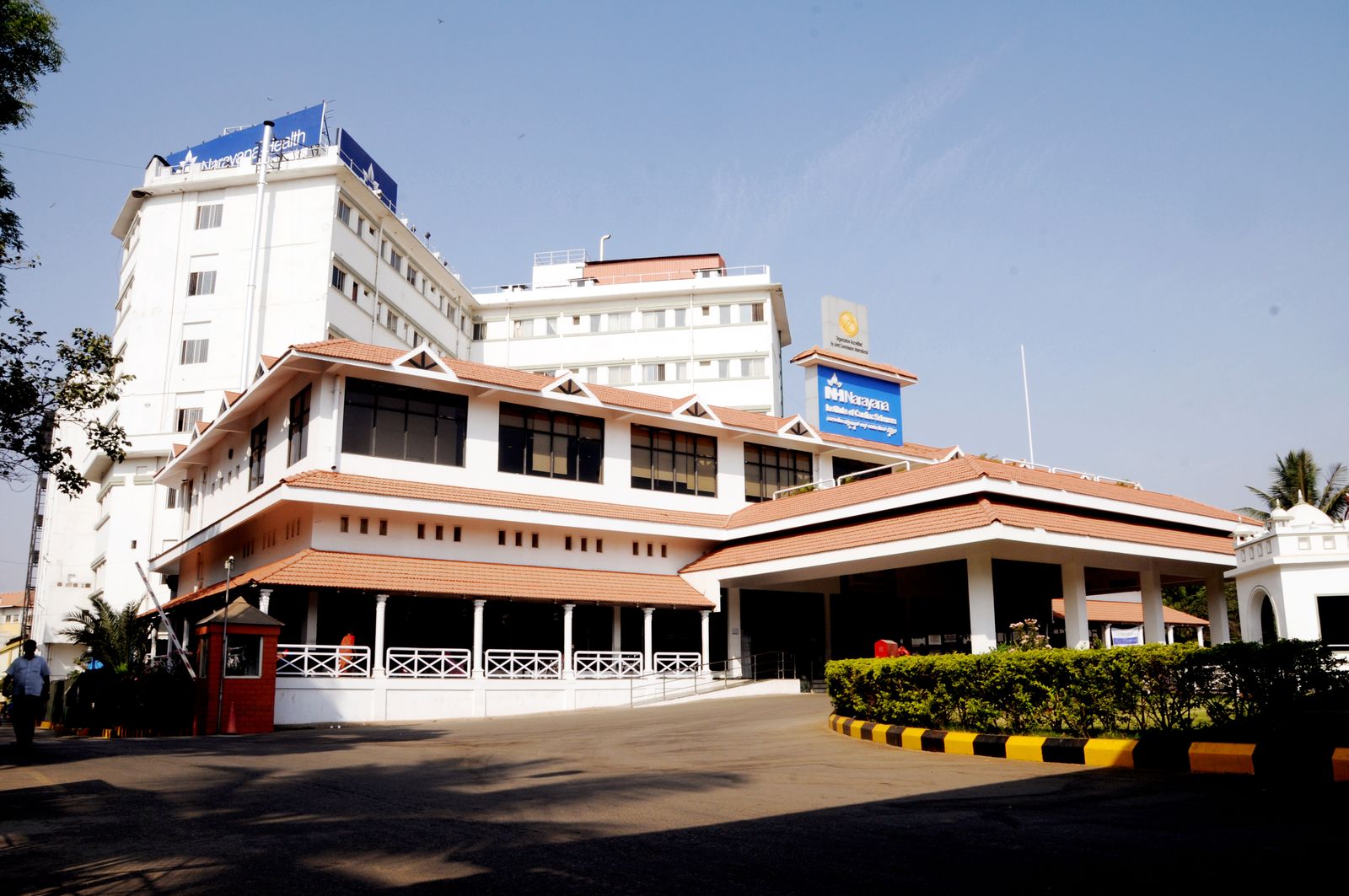
Now look at Bengaluru. In its investor presentation for the quarter to June 2026, Narayana Health reported that one hospital in that city, the Narayana Institute of Cardiac Sciences, performed 2,137 cardiac surgeries in three months. Twenty-three a day, every day, in one building. That is more heart operations in a quarter than Shouldice does hernias in a quarter, in a specialty where the organ on the table is the one that keeps the patient alive.
That is the argument. Not that India is cheap. That India’s domestic caseload is so enormous that its surgeons have done the operation two thousand times rather than two hundred, and that this is a clinical fact before it is an economic one. Volume is not a marketing claim. It is the reason the patient lives.
Volume is a clinical argument before it is an economic one. India has the volume and sells the discount.
The numbers India is sitting on
Four figures, each from a source I opened.
The Ministry of Tourism told Parliament in August 2025 and again in February 2026 that 6,44,387 foreigners came to India for medical purposes in 2024. It was 6,59,356 in 2023 and 6,97,453 in 2019. The pandemic took it under two lakh and it climbed back to roughly where it had been. Strip out the pandemic and the number has gone sideways for seven years.
As on 31 December 2024 there were 4,650 hospitals accredited by the National Accreditation Board for Hospitals and Healthcare Providers. Haryana led with 615, then Maharashtra with 507 and Delhi with 484. I will say now what NABH is and is not, because the industry blurs it. It is a standards accreditation. It tells you the hospital has a process for infection control, for consent, for records. It does not tell you what happened to the last thousand patients who had your operation there. It is a floor, and it is a good floor. It is not an outcome.
The cardiac number you have already seen. The price you saw in the first section.
Read the four together. The volume is real. The accreditation is real. The price is real. And the arrivals have sat near six and a half lakh since 2019. The thing that should convert the first three into growth of the fourth is missing, and the rest of this essay is about what it is.
What outcome at scale would mean
Michael Porter spent a career on competitive advantage and then turned the same instrument on hospitals. In December 2010 he put the result in a sentence in the New England Journal of Medicine.
Value in health care is measured by the outcomes achieved, not the volume of services delivered.
He defined value as the health outcomes achieved per dollar spent. Notice what that does to the Indian pitch. India has spent twenty years advertising the denominator. Nobody has published the numerator. A country that sells per-dollar without the outcome is not selling value. It is selling a dollar.
Porter was writing about American hospitals that bill for activity. The sentence lands harder on a country that advertises with a price. India measures itself by the thing it charges and has not learnt to measure itself by the thing it delivers, and until it does, outcome at scale is an assertion I am making rather than a position India holds.
So what would it take. Three things, none of them glamorous.
Volumes, published. Procedure counts by hospital and by surgeon, in a register anyone can read, the way Shouldice publishes its recurrence rate and the way Narayana already publishes its quarterly count to the stock exchange because securities law makes it. Outcomes, audited. Thirty-day mortality and one-year results for the twenty procedures foreign patients actually travel for, risk-adjusted and checked by someone who does not work for the hospital. Accreditation that moves from process to result. NABH tells you the building has a protocol. The woman in Tashkent does not care about the protocol. She cares what happened to the last five hundred women with her diagnosis in that theatre.
None of the 4,650 accredited hospitals is required to publish any of this today, and almost none does on its own. That is the honest state of the argument. India has the outcomes. It does not have the outcome data, and a claim without data is a slogan.
The layer between the fear and the theatre
Here is where I declare the interest.
The thing missing is not hospitals or surgeons. India has both in a quantity no comparable market has. The thing missing is the layer between a frightened family in Lagos or Tashkent and a theatre in Chennai. The second opinion before anyone books a flight. The price agreed in writing before departure, including what happens when something goes wrong. A visa that does not need the patient’s son to take three days off work. The person who meets the flight. A bed for the attendant. The call at six months, when the patient is home and the stitches are a memory and the only question left is whether it worked.
That layer is a trust business. It is not a medical business and it is not a travel business, and that is exactly why nobody has built it. Hospitals build hospitals. Travel agents book flights. Nobody owns the gap, so the gap is run by brokers.
The brokers are the proof. A policy brief from ICRIER in November 2024 found that NABH has run a certification for medical value travel facilitators since 2016, and that only 27 private entities held a valid one. Twenty-seven. For a flow of six and a half lakh patients a year. Everyone else in the chain is unlicensed, which means the commission is invisible, the price becomes negotiable after the family has landed, and their only recourse is a phone number that stops answering.
I intend to build that layer, and the name I am going to give it is IndiaMedica. It does not exist yet. There is no office and no patient, and I am not going to describe a product I have not built. What I will say is what it has to be. A fixed price before departure. One named person from the first call to the six-month follow-up. A second opinion from a surgeon who will not be the one operating. Volumes and outcomes for every hospital it sends a patient to, published, or the hospital is not on the list. And paid by the patient openly rather than by the hospital quietly, because a layer paid by the hospital is a broker with a website.
This essay set out to carry two patient accounts, with consent. I do not have them. I have not yet asked anyone to lend their illness to my argument, and I will not invent a family in Lagos to make a point about trust. When the accounts exist and the people in them have agreed, they will be added here with the consent stated. Until then this section rests on the numbers and on my own reading of the gap, which is the weaker evidence, and I would rather say so than pretend otherwise.
Where the critics are right
Medical tourism carries a real ethical charge and I am going to meet it rather than wave at it.
The first charge is capacity. Foreign patients consume beds and surgeons that Indian patients need. In aggregate the arithmetic says otherwise. Under Ayushman Bharat alone the government authorised 2.21 crore hospital admissions in 2024-25. Foreign medical arrivals in 2024 were 6.44 lakh, and not all of them were admitted anywhere. The entire international flow is under three per cent of one public scheme’s admissions in one year. India is not short of beds because of foreigners.
But the aggregate is where the critics are wrong and the particular is where they are right. The foreign patient is not spread across the 30,957 hospitals empanelled under that scheme. She is concentrated in perhaps a hundred private tertiary hospitals in Delhi NCR, Chennai, Kolkata, Mumbai, Bengaluru and Hyderabad, and inside those hospitals she pays an international tariff that is higher than the domestic one. A hospital that can fill a bed at the international rate has a reason to hold that bed, and a reason is all it takes. Nobody publishes the allocation. The critic cannot prove the crowding and the hospital cannot disprove it, and in that silence the critic is entitled to the benefit of the doubt.
The second charge is brokers who take a commission from both sides. This is simply true. Twenty-seven certified facilitators for six and a half lakh patients means the rest of the trade is a grey market, and grey markets charge the frightened the most.
The third charge is worse than either, and it is the one Indians would rather not read. In July 2024 the Delhi Police arrested a kidney transplant surgeon and five others for a racket that brought donors and recipients from Bangladesh on forged documents and ran the operations at a private hospital in Noida between 2021 and 2023. The surgeon was a visiting consultant there and worked at one of the best-known hospitals in the capital. A system that sells on price, polices its intermediaries badly and publishes no outcomes is precisely the system in which that happens. If India wants to sell outcome at scale it will have to prove it can keep its own theatres clean, and the proof has to be public.
And there is a fourth point the industry never makes because it cuts against the pitch. Many of the patients who could come are not poor. England’s waiting list stood at 7.33 million cases in July 2026, about 6.21 million people, with 111,000 of them waiting more than a year. Those patients are not fleeing bad medicine. They are fleeing a queue. India is selling itself as cheap to people who are not shopping only on price, and that is the clearest sign the positioning is wrong.
So. The critics are right on the particular hospitals, right on the brokers and right on the crimes. They are wrong on the aggregate, which is the only ground on which the industry argues back, which is why the argument never ends.
One customer is a hostage
There is a smaller and more immediate problem and it is the one that convinced me this positioning is urgent rather than interesting.
In 2024, by the Ministry of Tourism’s count, 4,82,336 of India’s 6,44,387 foreign medical arrivals came from one country. Bangladesh. Three in four. ICRIER traced the dependence back and found it had grown from 44.8 per cent of medical tourists in 2017 to 68.9 per cent in 2022. Iraq was next at 6.5 per cent. Then Yemen, Oman and the Maldives at two to three per cent each.
Then August 2024 happened in Dhaka. India restricted visas. By December 2024 the monthly count of medical arrivals had fallen 59 per cent on the year to about 30,800, the lowest in twelve months. Kolkata felt it first. A sector that had told itself it was a national export discovered it was a regional service to one neighbour, and that the neighbour’s politics was its revenue line.
This is what selling on price does. The buyer who comes for the price is the buyer who is nearest, because the flight is part of the price. India’s medical export is a border trade dressed as a global one. A business with one customer is not a business. It is a hostage, and it finds out on the day the customer has a bad year.
A business with one customer is not a business. It is a hostage.
The remedy is the positioning. A patient in Lagos or Tashkent or Birmingham does not come because India is nearest. She comes, if she comes, because the surgeon has done it two thousand times and somebody she trusts has told her so in writing before she paid. That buyer is not lost when a neighbour’s government falls. Outcome travels. Price does not.
The wager
A claim about outcomes ought to carry one of its own. Here is this one.
By 31 December 2029 India will be named in the top two global destinations for cardiac and orthopaedic procedures by at least two published international destination indices, and the ranking will be on outcome and not on price. Not cheapest. Best or second best, for the two specialties where the domestic volume is largest and the clinical case is clearest.
I will name the scorers now rather than later. The first is the Medical Tourism Index of the Medical Tourism Association, the only destination ranking with a published method I have found and the one that put India tenth. The second is whichever other destination index with a published method exists by then. If there is still only one, that is itself evidence for this essay, and the Medical Tourism Index decides alone.
Four markers on the way, all public. 1. At least ten NABH-accredited hospitals publish procedure volumes and risk-adjusted outcomes by specialty on a register anyone can read, by the end of 2028. 2. Bangladesh falls below half of India’s foreign medical arrivals in the Ministry of Tourism’s count, not because Bangladesh falls but because the rest rises. 3. The number of NABH-certified facilitators passes two hundred. Twenty-seven is a confession. 4. An international index scores India higher on quality of facilities and services than on cost, the first time the clinical column beats the price column.
My call, first published 9 September 2026.
If by the end of 2029 India is still ranked on cost alone, the positioning has not shifted and the opportunity stayed theoretical. I will write that essay with this one left standing. And I will hold my own intention to the same date. If IndiaMedica does not exist by then, with published outcomes for every hospital on its list, the first failure on the scorecard is mine.
India is already the doctor. It has only ever introduced itself as the discount.
Nikhil Sharma, writing as Nishkrant Nikhil. Gurugram, 9 September 2026.
Sources: Medical Tourism Index 2020-21 for the top ten and India’s rank and score; the publisher’s page describes it as the third edition and listed no later one when this essay went up; and the same body’s price comparison for the 2021 list prices by country. TurkStat health tourism figures for 2023 as reported by AGBI, April 2024. Luft, Bunker and Enthoven, Should operations be regionalized?, New England Journal of Medicine 1979, 301(25):1364-9. Charaka Saṃhitā Sūtrasthāna 9.6 in the Charak Samhita Online edition. Gawande from Complications, 2002, checked against the Harvard Magazine excerpt. Shouldice Hospital’s own figures in its submission to the Scottish Parliament, 10 January 2022. Narayana Health investor presentation for the quarter to June 2026, filed to the NSE on 31 July 2026, for the 2,137 cardiac surgeries. Ministry of Tourism answer in Parliament, 18 August 2025 for 2023 and 2024 medical arrivals and the Bangladesh count, and its answer of 9 February 2026 for the series from 2019. NABH-accredited hospitals as on 31 December 2024, Rajya Sabha Unstarred Question 288, answered 4 February 2025. Porter, What Is Value in Health Care?, New England Journal of Medicine, 23 December 2010, 363(26):2477-80. ICRIER policy brief 29, Looking Beyond Bangladesh, November 2024, for the source-country shares and the 27 certified facilitators. Ayushman Bharat admissions and empanelled hospitals as told to the Lok Sabha, 28 March 2025. The Delhi kidney transplant racket, Deccan Herald, 9 July 2024. The December 2024 fall in medical arrivals, Business Today from Ministry of Tourism data, 2 March 2025. NHS England waiting list, July 2026, BMA analysis of NHS England data.