विमर्श Vimarsh · Kūṭanīti
India Won 1971 in August
The war lasted thirteen days in December. The victory was assembled over the nine months before it: a treaty signed in August, a tour of six capitals in November and three vetoes in a single fortnight. विजय Vijay, the first of India’s great diplomatic wins.
Nikhil Sharma · कूटनीति Kūṭanīti · 20 October 2026 · 8 min read
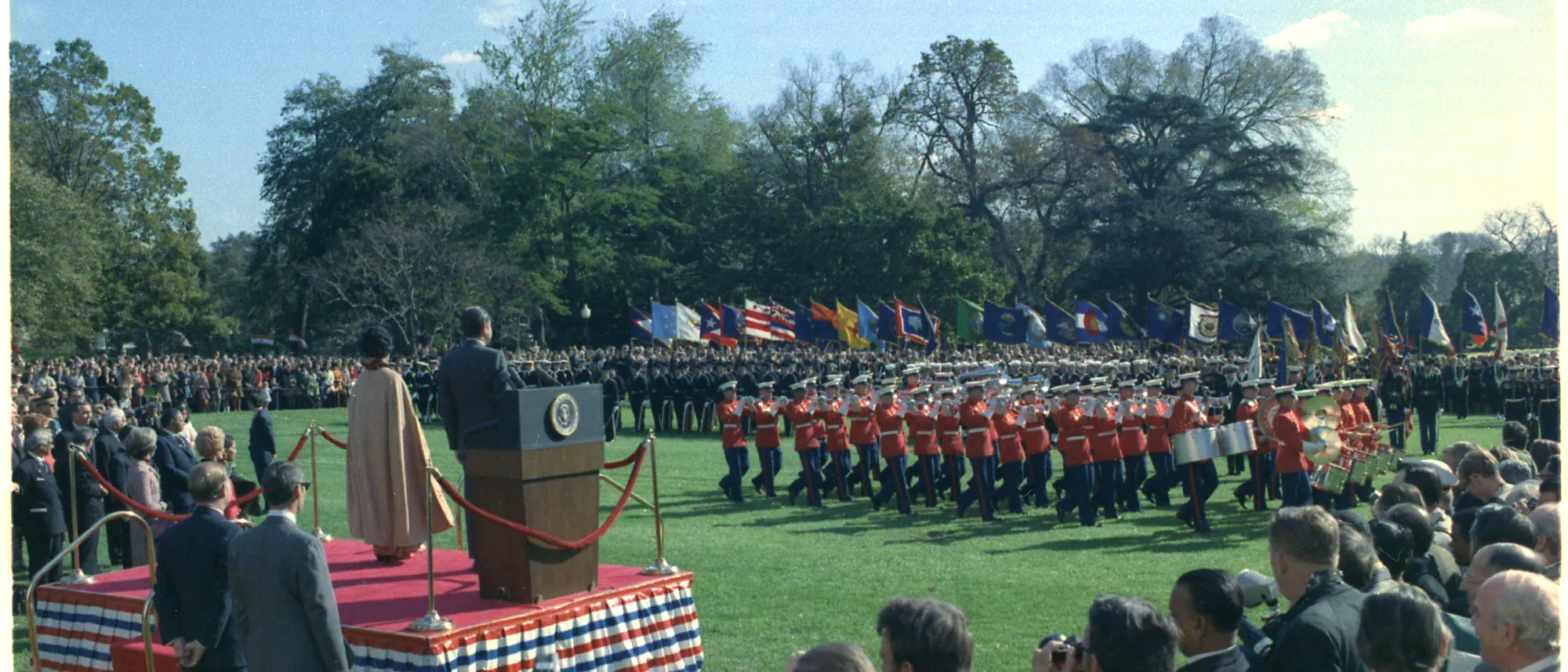
A reading of the public record. Every date and figure is sourced at the end.
Most people remember 1971 as a war that took thirteen days. It was a negotiation that took nine months and ended with thirteen days of war.
This is the first essay in विजय Vijay, a series on the diplomatic wins that shaped modern India. Its companion series अनुभव Anubhav covers what the harder chapters taught. 1971 belongs at the start because almost every lesson the later wins teach was first learned that year.
One thing first. The liberation of Bangladesh was won above all by the people of Bangladesh. This essay is about India’s part in it, and specifically about the part that was fought with treaties, letters and votes rather than with guns.
संकट · The crisis
On the night of 25 March 1971 Pakistan’s army began a crackdown in what was then East Pakistan. Within days the American consulate in Dacca was reporting mass killings. On 6 April its staff sent Washington a dissent telegram, signed by Consul General Archer Blood and his colleagues, accusing their own government of what many would call moral bankruptcy.
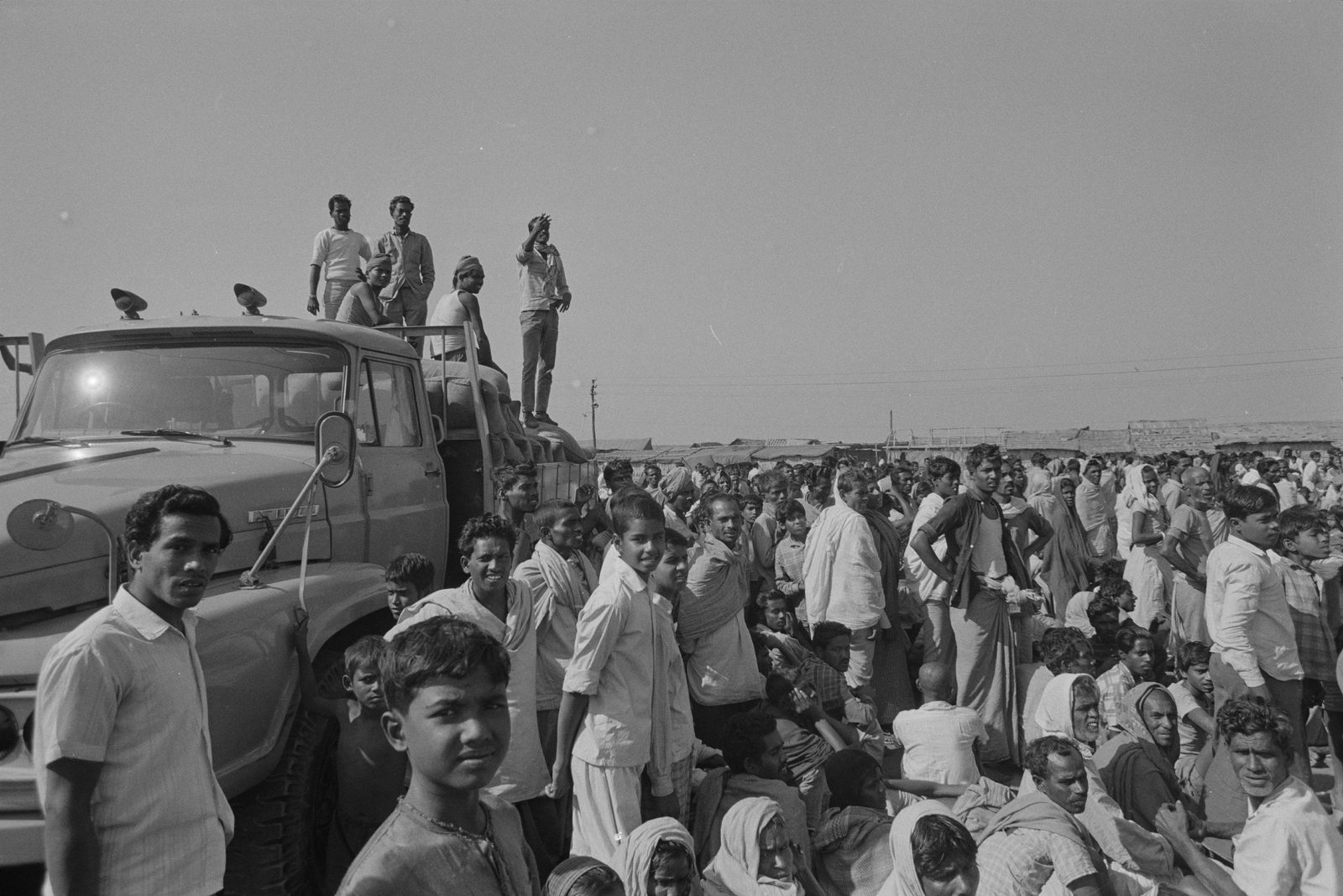
Then the people came. Nearly ten million refugees crossed into India in nine months, into West Bengal, Tripura, Meghalaya and Assam. By the end of May the UN refugee agency counted almost four million. On some days more than a hundred thousand arrived.
For India the crisis was now an internal one. It was also, for the rest of the world, somebody else’s problem. The whole of India’s diplomacy that year was an effort to change the second fact.
घेरा · The encirclement
In July the ground moved under India’s feet. Henry Kissinger flew secretly from Pakistan to Beijing to prepare President Nixon’s opening to China. Pakistan’s ruler Yahya Khan had arranged the trip. The two powers India feared most were now being introduced to each other by the country it was most likely to fight.
On 17 July Kissinger told India’s ambassador in Washington, L. K. Jha, that the United States would not help India if China intervened in a war with Pakistan. Whatever India decided next it would decide alone unless it found a partner.
संधि · The treaty
The partner had been waiting for two years. The Soviet Union had proposed a treaty in 1969, after its own border clashes with China on the Ussuri river. A draft was essentially agreed by late 1970. Indira Gandhi had held back, wary of the reaction at home and in Washington.
Kissinger’s trip ended the hesitation. On 9 August 1971, exactly a month after he landed in Beijing, Swaran Singh and Andrei Gromyko signed the Indo-Soviet Treaty of Peace, Friendship and Cooperation in New Delhi.
Its key clause was Article IX. If either country was attacked or threatened the two would immediately enter into mutual consultations and take appropriate effective measures. It was not an alliance and it did not promise troops. It did not need to. It told Beijing and Washington that a war on the subcontinent would now involve Moscow, and it gave India the one thing it could not manufacture: a veto in the Security Council.
The treaty was not popular at home. Most parties criticised it. Atal Bihari Vajpayee of the Jana Sangh called it a Soviet stab in the Indian back. Indira Gandhi signed it anyway, and the treaty kept Article IV, in which Moscow recognised India’s non-alignment. India took the insurance without giving up the policy.
The treaty did not promise troops. It did not need to. It made a war on the subcontinent Moscow’s business.
मामला · The case
A partner was half the work. The other half was making the world see the refugees as its problem and not only India’s.
Indira Gandhi went to Moscow at the end of September. On 24 October she set out on a tour of six Western capitals: Brussels, Vienna, London, Washington, Paris and Bonn. For three weeks she made the same argument in every room. Nearly ten million people had been driven out. Their home country would not take them back. India could not carry them forever. And the only solution was a political one for the people of East Bengal.
On 4 November she met Nixon at the White House. The meeting went badly, and the tapes released decades later show how much the two disliked each other. It did not matter. The tour was not designed to win Nixon. It was designed to make sure that when India acted no Western government could say it had not been told, and that European opinion would not line up behind Washington.
The case was also made by restraint. Through the summer India declined calls to recognise Bangladesh. In August Indira Gandhi said recognition required careful consideration of all aspects. India would move last and be seen to.
दबाव · The pressure
On 3 December Pakistan’s air force struck Indian airfields in the west. India declared war that night. Three days later, on 6 December, it recognised Bangladesh.
Now the treaty paid. On 4 December the Security Council voted on a draft calling for a ceasefire and the withdrawal of forces. Eleven members voted for it. The Soviet Union vetoed it. It vetoed a second draft on 5 December and a third on 13 December. Each veto bought days, and the war needed only days.
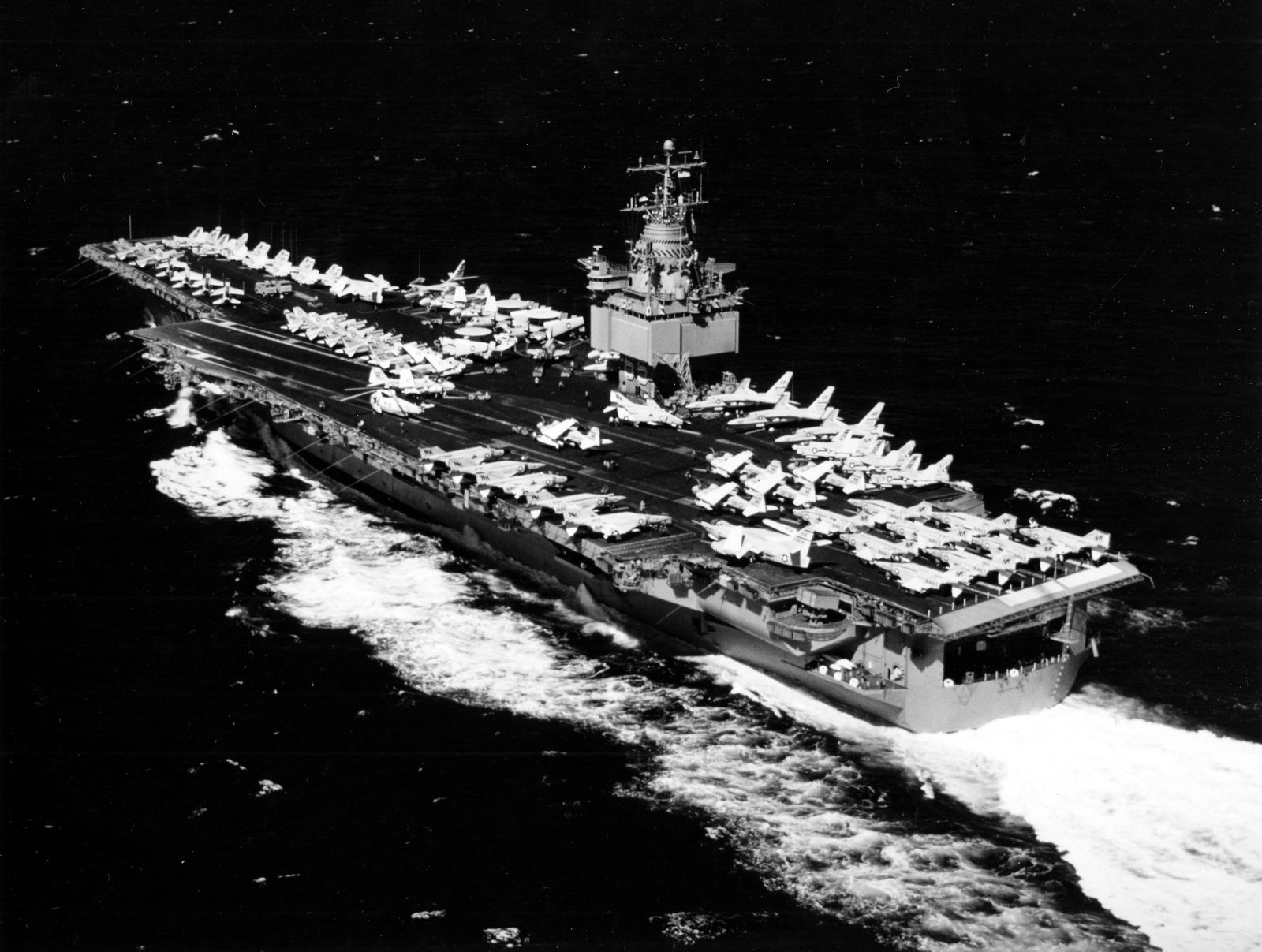
Washington tried one more lever. On 8 December Kissinger proposed sending a carrier group to the Bay of Bengal. Task Force 74, led by the nuclear-powered carrier USS Enterprise, sailed through the Strait of Malacca. Soviet naval groups followed it into the Indian Ocean. Accounts differ on how close the two came, but the Enterprise did not change the course of the war, and the treaty is the reason it could not.
परिणाम · The result
On 16 December 1971 Lieutenant General A. A. K. Niazi signed the Instrument of Surrender in Dacca before Lieutenant General Jagjit Singh Aurora. Some 93,000 Pakistani soldiers and civilians became prisoners of war. India then declared a ceasefire on its own, and on 21 December the Security Council adopted Resolution 307 calling for the ceasefire to be observed.
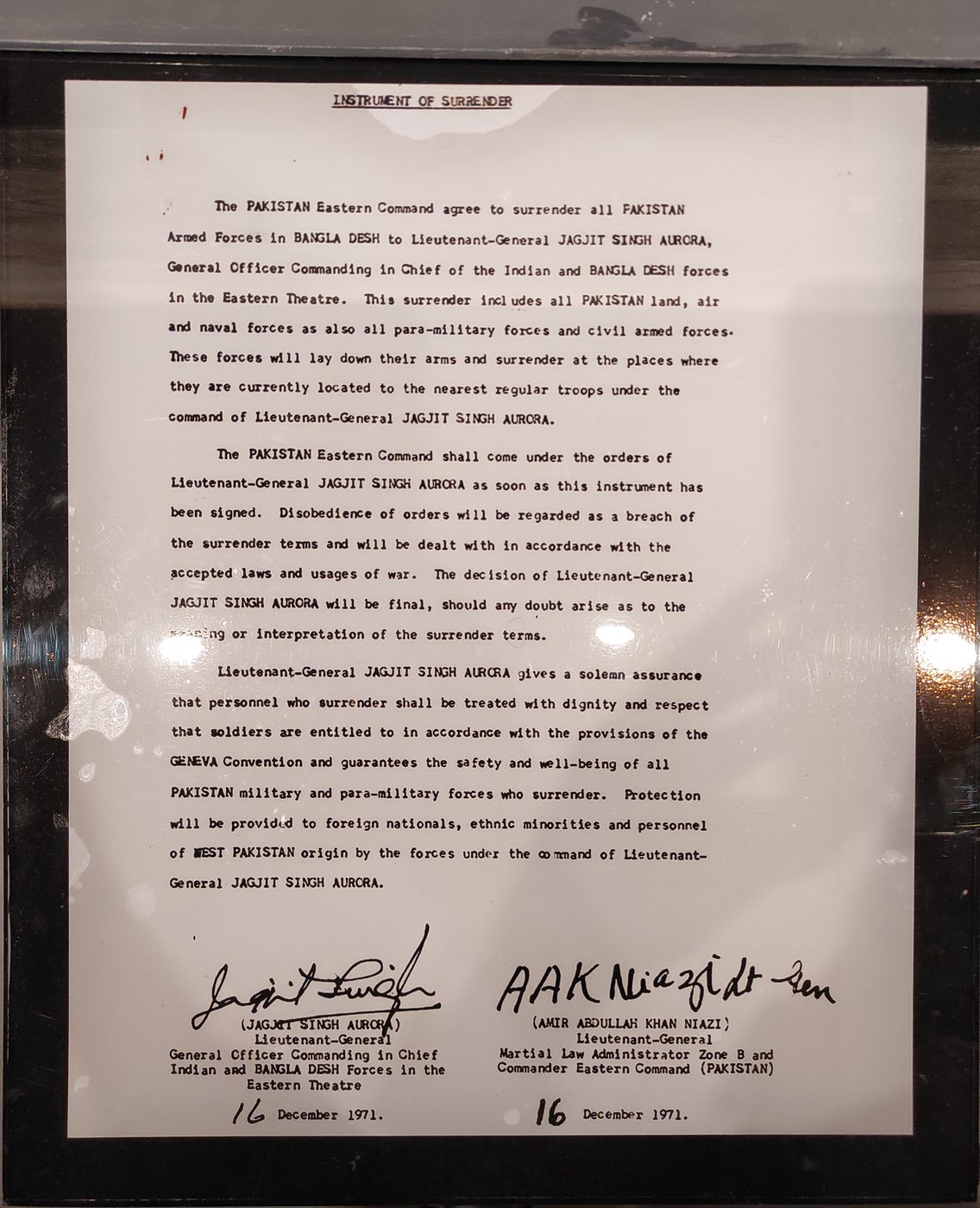
The order matters. The ceasefire India accepted came after the outcome and on India’s terms, not before it on the Council’s. A new country existed. China’s veto would keep Bangladesh out of the United Nations until 1974, but it could not undo it.
सीख · What a negotiator can take
Sign the partnership before you need it. The treaty was two years in the making and signed four months before the war. Partners found in the middle of a crisis come at a price. Partners found before it come with a veto.
Make your problem everyone’s problem. Ten million refugees were India’s burden. The tour turned them into Europe’s question. A founder whose problem stays private negotiates alone.
Move last and be seen to. India did not recognise Bangladesh until the war had begun. The patience was itself an argument.
Close the forum that can stop you. The vetoes did not win the war. They stopped others from ending it early. In every negotiation there is a room that can impose a settlement before you are ready. Know who in it will speak for you.
Stop when you have won. The unilateral ceasefire came within a day of the surrender. Legitimacy is spent by going one step too far and earned by stopping one step early.
मूल्य · What it cost
The treaty tied India more closely to Moscow for two decades, and the United States treated India with suspicion for years afterwards. The refugees cost India dearly before most of them went home in early 1972. And the peace that followed at Simla in July 1972 is still argued over. That argument belongs to अनुभव Anubhav and will have its own essay.
The historian Srinath Raghavan has shown that Bangladesh was not inevitable. It was made by choices taken in a dozen capitals in a single year. India’s were among the best it has made.
What I am not saying
I am not saying the war was diplomacy’s alone. The armed forces and the Mukti Bahini fought it, and many died.
I am not saying the outcome was free of tragedy. The year began with mass killing and ended with millions displaced.
This Vimarsh carries no wager. It reads a record that is closed, not a future that is open. The wagers return with the essays on the wins still unfolding.
Next in विजय Vijay: the 2015 Land Boundary Agreement with Bangladesh, which ended sixty-eight years of enclaves.
Gurugram, 20 October 2026.
Sources, checked 20 October 2026. The Blood telegram of 6 April 1971: ADST, “Our government has evidenced moral bankruptcy”. Refugee numbers: UNHCR, The State of the World’s Refugees 2000, chapter 3; Governance Now, How India responded to the influx of 10 million refugees. Kissinger’s July trip and his message to L. K. Jha, the treaty’s origins in 1969 and Vajpayee’s criticism: Nandan Unnikrishnan, ORF, 1971: When Delhi and Moscow came together; USC US-China Institute, Getting to Beijing. The treaty text, Articles IV, IX and XI: Treaty of Peace, Friendship and Cooperation, 9 August 1971. Indira Gandhi’s 1971 travel: List of her international trips; the Nixon meeting of 4 November: Richard Nixon Foundation. Her August statement on recognition and the surrender: Rasheed Kidwai, ORF, How the 1971 war was fought and won. Pakistan’s strikes of 3 December and India’s recognition of Bangladesh on 6 December: Julian Francis, Dhaka Tribune, When India recognized Bangladesh. The three Soviet vetoes and Resolution 307: UN Dag Hammarskjöld Library, Security Council meetings 1971. Task Force 74: Swarajya, December 1971: when the US sent its naval ships into the Bay of Bengal. The Instrument of Surrender and the prisoners: Pakistani Instrument of Surrender. Bangladesh’s UN admission in 1974: Bangladesh and the United Nations. The argument that Bangladesh was not inevitable: Srinath Raghavan, 1971: A Global History of the Creation of Bangladesh, Harvard University Press.