विमर्श Vimarsh · Rājnīti
Pakistan Needs One More General. The One Who Hands It Back.
Thirty-three years of direct rule in seventy-nine, and not one prime minister who finished a term. The repair cannot come from outside the army, so it must come from an officer who gives the country back, and from an India disciplined enough to say nothing while he does. Written on the day of Operation Sindoor and held for seventeen months.
Nikhil Sharma · राजनीति Rājnīti · 7 October 2026 · 25 min read
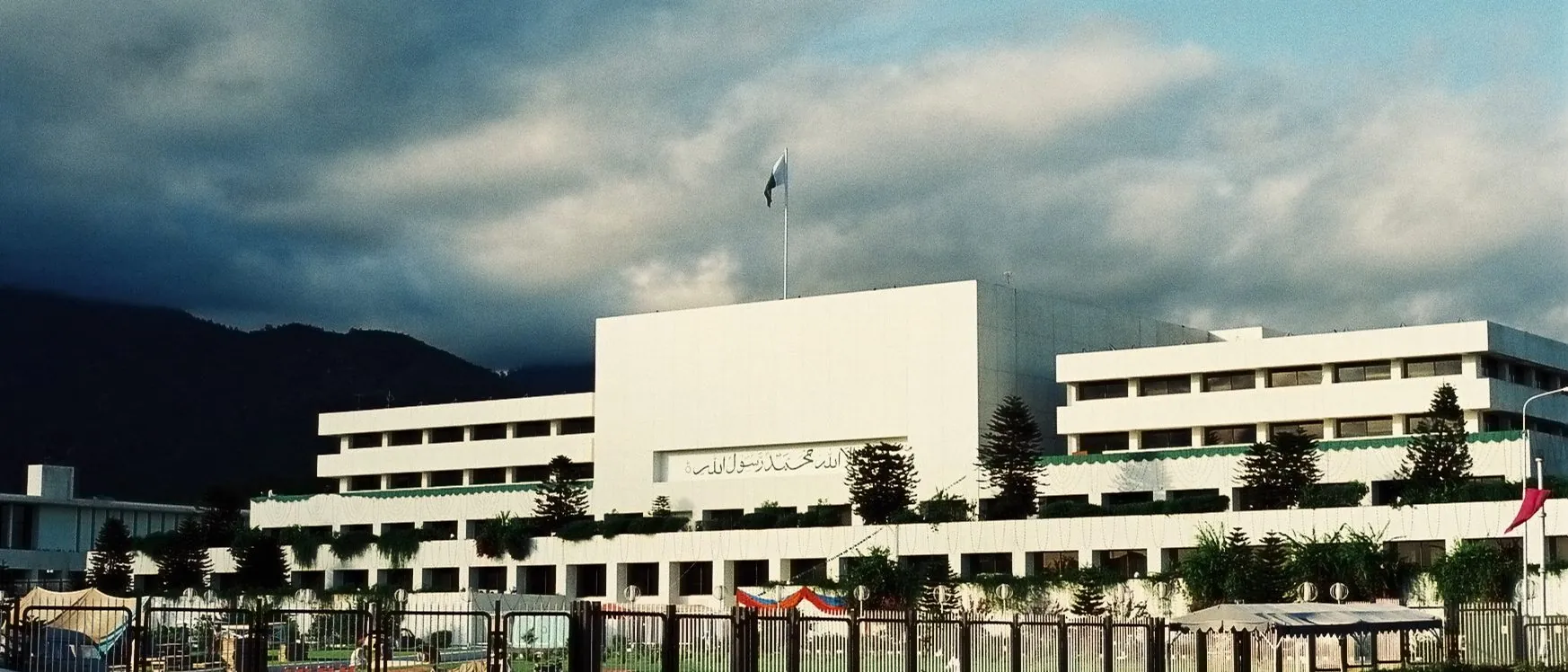
Written 7 May 2025, the day Operation Sindoor began. Published unchanged in argument, with the evidence deepened.
A note on the date
I wrote the first version of this on 7 May 2025, the day Operation Sindoor began.
I want that on the record because of what it does to everything below it. This is not a piece written in a calm season by a man with no stake. It was written on the day of maximum anger, in a country I love, about a neighbour that had just been struck for a reason most Indians considered overdue.
I held it for seventeen months. I read it again after the ceasefire, and again months later, and I have changed the evidence and not the argument.
If what follows reads as generous towards Pakistan, understand when it was written. A position taken on your worst day is the only kind worth keeping.
The sentence that was not about Prussia
Some time in the late eighteenth century a line began circulating about Prussia. Most states, it ran, have an army. Prussia is an army that has a state. It has been attributed to Voltaire and to Mirabeau and it was probably sharpened by both. It has since been lent to half a dozen countries and it has gone soft from use.
I want to take it back out of the quotation books and use it the way it was meant — not as an insult but as a diagnosis. A diagnosis is the only kind of sentence that leads anywhere.
Pakistan does not have an army. The army has Pakistan.
This is not a remark about soldiers, who are mostly brave and badly served. It is a statement about where decisions sit. The institution does not simply defend the country. It holds land. It runs trusts and industries. It decides who may govern and for how long and what the country is permitted to want. Civilian governments arrive and leave on a schedule. The institution does not leave.
Everything in this essay follows from that one fact.
इति ह आस — so indeed it was
Before Pakistan there was Sparta, and Sparta is the case nobody wants to finish reading.
We remember the beginning. Boys taken at seven into the agoge. Men eating together in the syssitia until they were sixty, the black broth that visitors could not swallow, the helots farming so that citizens need do nothing but train. A whole society arranged around the production of one thing. For two centuries it worked so completely that other Greeks stopped testing it.
Then 371 BC, a field at Leuctra in Boeotia, and a Theban called Epaminondas who had noticed something nobody else had — that the Spartans always put their best men on the right, and that you could stack your own left fifty deep and break them before the rest of the line even engaged.
Xenophon gives the butcher's bill. A thousand dead. Four hundred of the seven hundred full Spartiates on the field.
Four hundred. That is the number that should stop you — and not because it is large. Aristotle, writing a generation afterwards, reckoned the whole body of full Spartan citizens by then at fewer than a thousand men. Sparta lost close to half of what it had left in a single afternoon.
The most militarised society in the ancient world had, by the time of its last real battle, a citizen body you could have seated in a village hall. The Greeks had a word for what had happened — oliganthropia, the shortage of men. Sparta had spent three hundred years perfecting the manufacture of soldiers and had, in the process, forgotten to manufacture Spartans. Land concentrated into fewer hands. Fewer men could pay their mess dues. A man who could not pay lost his citizenship. The machine ate its own inputs.
It never recovered. Not in a generation. Not ever.
A state organised entirely around its army does not fall because it loses a war. It falls because the arrangement that makes it formidable is the same arrangement that hollows it out, and the bill arrives in a single afternoon after two centuries of looking invincible.
इति ह आस. So indeed it was.
What Kautilya would have asked
The most unsentimental book on statecraft the subcontinent has produced is attributed to Kautilya, adviser to the first Mauryan emperor, somewhere around the fourth century before Christ. Attributed is the honest word. The text we have is composite and most scholars now date its final form centuries after the man, so I will take it as the tradition takes it rather than claim a certainty nobody has. The Arthaśāstra is not a moral treatise. It contains instructions on spies, on poisons, on when to break a treaty. Nobody has ever accused it of being soft.
And this is the test he sets for a ruler.
प्रजासुखे सुखं राज्ञः प्रजानां च हिते हितम् । नात्मप्रियं हितं राज्ञः प्रजानां तु प्रियं हितम् ॥
In the happiness of the people lies the king's happiness. In their welfare, his welfare. What pleases the king is not the good. What pleases the people — that is his good.
Read that against an institution that owns a state.
An army exists to protect a people. The moment it owns them it has acquired an interest of its own, and the moment it has an interest of its own it will — not from wickedness, simply from structure — begin to confuse its welfare with theirs. Kautilya saw this coming two thousand three hundred years ago and wrote the test in a single line. Pakistan's army fails it not because its officers are bad men but because no institution that owns a country has ever passed it.
There is a second thing worth saying here, and Indians will not enjoy it.
Kautilya's rājamaṇḍala — the circle of states — holds that the neighbour is the natural adversary and the neighbour's neighbour the natural friend. On that specific doctrine Pakistan has outplayed us for decades. It has run the mandala with more patience and less sentiment than we have, cultivating our neighbours' neighbours while we were busy being hurt. Our own strategist is better understood in Rawalpindi than in Delhi.
I would rather write that down than pretend otherwise.
The same test, in a scripture I was not raised in
I am a Hindu businessman from Gurugram. I am not a scholar of Islam and I am not going to pretend to instruct anybody in their own faith.
I am citing it for two reasons, and I would rather state them than let a reader guess.
The first is practical. An argument should be made in the language the listener already trusts. If this essay is ever read by the officer it is written for, it will not be Kautilya that moves him.
The second is the more interesting one, and I have to be careful with it. Traditions that never spoke to each other keep arriving at the same place in this essay — Pataliputra, Florence, Madinah. But I chose the passages, and a man who selects his quotations can make any four traditions agree about anything. So I will not call it proof. I will call it what it is: one idea that keeps turning up in places with no contact between them. That is a reason to look harder at the idea. It is not a reason to stop looking.
So here is the same test Kautilya set, in the book that half the subcontinent swears on.
تؤدوا الأمانات إلى أهلها
Indeed, Allah commands you to render trusts to whom they are due, and when you judge between people to judge with justice.
أمانة · amānah. A trust. Something held on behalf of its true owner and owed back to him.
That word is the whole essay in four letters. A country held by an institution is an amānah. It is held on behalf of the people it belongs to. And the verse does not say administer the trust well, or hold it until the holder judges the owner ready. It says render it to those to whom it is due.
And on what holding it costs the holder —
Abu Dharr, you are weak, and authority is a trust. On the Day of Judgment it is a cause of humiliation and regret, except for one who fulfils its obligations and properly discharges the duties attendant upon it.
The Prophet is refusing a good man a position of command. Not because the man is wicked. Because authority held without the capacity to discharge it fully becomes a liability to the one holding it.
All of you are guardians and responsible for your wards and the things under your care.
Set that beside प्रजासुखे सुखं राज्ञः from four hundred years before it. Guardianship, not ownership. The welfare of the governed as the measure of the governor. Two traditions, one test, no contact between them.
And then there is the verse that states my entire argument about why no outsider can do this, more economically than I have managed in two thousand words.
Indeed, Allah will not change the condition of a people until they change what is in themselves.
Which raises the fairest objection I have had to this essay. If a people must change what is in themselves, why have I rested the whole thing on one man in a uniform?
Because Pakistan has already run the other experiment, and I watched it. In 2007 the lawyers walked. In black suits, for a chief justice, down roads where that gets you beaten, and they won — Musharraf restored Iftikhar Chaudhry, and then lost the office. It is the finest thing the Pakistani street has done in my lifetime and I will not have it patronised.
It is also the proof of the limit. The lawyers could restore a judge. They could not touch the land, the trusts, the housing schemes, the command. A movement can remove a man. It cannot release a state from an institution that owns part of it. So I bet on the officer, not because he matters more than the people, but because he is the only one standing where the lock is.
I did not go looking for that. I went looking for something about trusts and found the thesis of this essay sitting in a seventh-century text, phrased better than I had phrased it.
No army outside the border changes this. No aid package. No summit. It changes when something inside changes, or it does not change.
Machiavelli, in his good clothes
In December 1513, exiled to a farm at Sant'Andrea after being arrested, racked and released, a sacked Florentine official wrote to his friend Francesco Vettori to describe his evenings. He would come in from the fields, take off the mud-caked day clothes, and put on regal and courtly garments — his words — and so dressed enter the ancient courts of ancient men, where he was received with affection and where, for four hours, he felt no boredom and did not fear poverty or death.
That is the image I keep of Machiavelli. Not the schemer. A ruined man dressing up to speak with the dead because the living had no use for him.
What he wrote in that condition included chapters twelve and thirteen of *The Prince*, and they are the ones relevant here. Mercenaries and auxiliaries, he says, are useless and dangerous. A prince who rests his state on arms that are not his own will never stand firm, because such arms are disunited, ambitious, undisciplined and faithless. He had watched Italy ruined by exactly this for twenty years.
The usual reading is that he is warning against hired soldiers. The deeper reading is that he is warning against armed force with an interest of its own. Machiavelli's remedy was the citizen militia, and he actually raised one for Florence in 1506 — soldiers who had somewhere else to go home to, whose stake in the republic was the republic itself.
An army that owns farms, factories, housing estates and banks has somewhere else to go home to as well. It is simply that the somewhere else is also the state.
Kautilya and Machiavelli agree across eighteen centuries and two civilisations that never spoke to each other, and the agreement is this. Power without an outside interest becomes its own purpose.
The sentence every realist quotes, and the part they leave out
In 416 BC the Athenians came to the small island of Melos and told its magistrates the most famous thing anyone in antiquity said about power.
The strong do what they can, and the weak suffer what they must.
Thucydides set it down as a dialogue, and every realist since has quoted it with a certain satisfaction, as though it settled something.
Read on.
Athens killed the men of Melos and sold the women and children. One year later it launched the Sicilian expedition. By 413 the fleet was destroyed and the army gone. By 404 the walls of Athens came down and the city that had spoken the sentence was taking orders from Sparta — which, as we have seen, had thirty-three years left at the top and no more. Leuctra was 371.
The Melian Dialogue is not a lesson in realism. It is a case study in what happens to a power that believes its own strength is a permanent fact. Thucydides put those words in the mouths of men he then shows destroying themselves, and he did it on purpose. He was the first historian to write for the second reading.
Ibn Khaldun's clock
In 1377, sheltering in a castle at Qalat Ibn Salama in what is now Algeria, having lost both parents to the Black Death and his patrons to politics, Ibn Khaldun wrote the *Muqaddimah*. He was trying to answer one question. Why do all these dynasties keep doing the same thing.
His answer was عصبية · asabiyyah — group feeling, the solidarity that lets men act as one. A group with high asabiyyah comes in from the periphery and takes the centre. The second generation, raised in the capital, inherits the power and some of the cohesion. The third has only the luxury. Factionalism replaces solidarity, the army is hired rather than raised, and a new group with real asabiyyah arrives from the edge.
Three generations. About forty years each. Roughly a hundred and twenty years for the full turn.
Pakistan is seventy-nine years old.
I am not going to pretend that is a prediction. Ibn Khaldun was describing dynasties, not modern states, and anyone who maps his clock onto a nation-state too confidently deserves what he gets. But the shape is worth holding. Institutional arrangements that look permanent are usually in the third act of something, and the people inside them are always the last to know. Nobody in Sparta in 400 BC thought they were living in the second-last generation.
इति ह अस्ति. So it is.
What the modern historians established
The history of Pakistan's army is not a history of coups. That is the error that makes the problem look solvable by a coup.
Ayesha Jalal — herself Pakistani, and the most rigorous writer on this — made the argument in *The State of Martial Rule* in 1990, and the subtitle is the whole thesis: *the origins of Pakistan's political economy of defence*. A new state inherited a long hostile border and a small share of the undivided resources, defined itself by the security problem, sought American alliances to close the gap, and in doing so built an institution that outgrew every civilian structure around it. By the time General Ayub Khan took power in 1958 the balance had already shifted. The coup ratified an arrangement; it did not create it.
Ayesha Siddiqa did the work the first marker rests on. *Military Inc.* put a structure and a number on the army's commercial empire — the welfare foundations, the land allotments, the cement, the cereal, the housing schemes — and she paid for it in the way Pakistani writers do. Hussain Haqqani traced the second leg, the deliberate cultivation of religious politics as a strategic instrument, and what it costs to put down an instrument you have taught to walk. Stephen Cohen wrote about the idea of Pakistan and the army's self-appointment as its only reliable custodian. Christophe Jaffrelot named the result exactly — instability and resilience. A state that keeps nearly falling and keeps not falling.
None of them are Indian polemicists. Two are Pakistani, and nobody in Islamabad has ever confused Siddiqa or Haqqani with a friend — both paid at home for the writing. That is the point. The people who know the structure best are the ones it punished for describing it, and they describe the same structure.
Why another general is not the answer
And so to the part where most people who reach my diagnosis reach for the wrong cure.
They want a strongman. A clean officer. Someone who takes charge and sorts it out.
Pakistan has run that experiment four times — three by coup and once by handover. Ayub in 1958. Yahya in 1969. Zia in 1977. Musharraf in 1999. Each arrived to clean up a mess made by politicians. Each left a mess requiring the next one. The coup is not the treatment for this disease. The coup is the disease presenting as its own treatment, which is the hardest kind to diagnose because the patient keeps getting temporary relief.
So the act I am describing is the opposite one.
He does not take the country. He gives it back.
He is the man who looks at the institution he loves — and he must love it, or none of this works — and concludes that its final service is to stop governing. Who returns the trusts. Who lets a court rule against him and does nothing about it. Who permits an election he cannot control and accepts a result that humiliates him. Who takes the army out of the economy and puts it back on the frontier, where its honour actually lives and where, incidentally, it is needed.
That is harder than any coup. A coup requires nerve, which is common. This requires a powerful man to make himself smaller on purpose, which is not.
कर्मण्येवाधिकारस्ते मा फलेषु कदाचन ।
You have a right to the action. Never to its fruits.
A general who hands back a country will not be thanked for it in his lifetime. His own officers will call him weak. The politicians he enables will take the credit and some of them will deserve it. The fruit is not his. Only the act is.
सच्चा सपूत. If Pakistan ever produces a true son who deserves its highest honour, it will not be the general who seized the state. It will be the one who returned it.
He will not be remembered for having taken the amānah. He will be remembered for having rendered it.
यद्यदाचरति श्रेष्ठस्तत्तदेवेतरो जनः ।
Whatever the finest man does, the rest will do.
Four armies that were asked to leave
Sparta and Athens are vivid and two thousand years away. The useful precedents are inside living memory, and there are four of them.
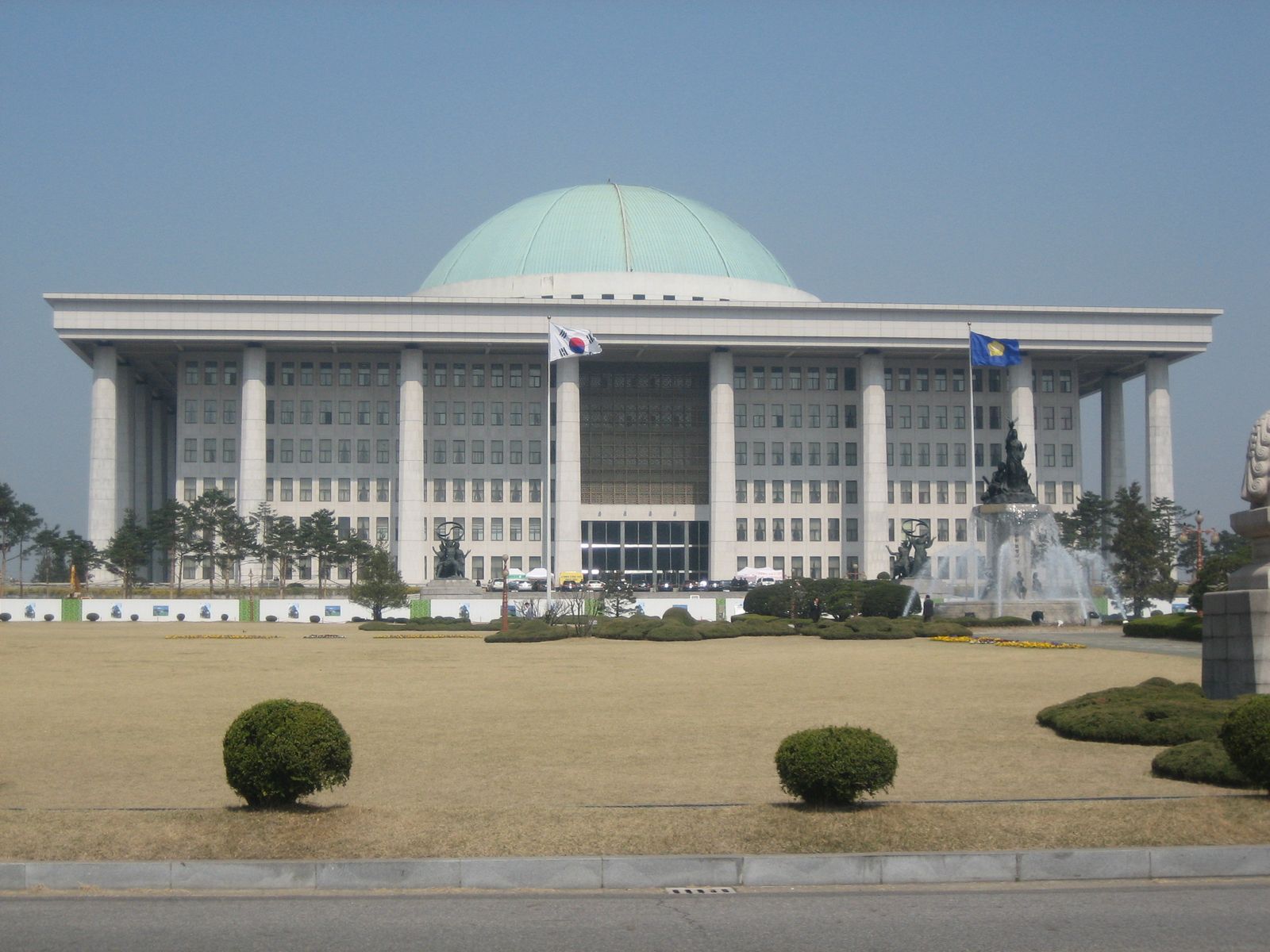
Portugal, 25 April 1974. The Movimento das Forças Armadas — captains, not generals — brought down the Estado Novo and handed the country to civilians inside two years. The only clean case in the set. It took an army that had lost a colonial war and, more importantly, knew it had.
Chile, 5 October 1988. Pinochet held a plebiscite he expected to win, lost it fifty-six to forty-four, and went. He went because the constitution he had written himself required it and because his own junta refused to annul the result. The lesson is uncomfortable and precise: the exit has to be written down in advance, by the man who still believes he will win.
Myanmar, 2011. The Tatmadaw opened. It released Aung San Suu Kyi, allowed elections, took the sanctions off. In February 2021 it took all of it back in a single morning. That opening was never a transfer. It was a lease, and the landlord gave notice.
Indonesia, 2004. This is the one that cuts against me hardest, so I will put it at its full strength. A reforming government in a country that had just removed a dictator passed a law ordering the military out of business — the foundations and companies to be valued and handed to the state by 2009. A deadline. Legal force. A democratic mandate. And it largely failed. The paperwork moved; the territorial command structure that made the businesses possible was never dismantled, and in March 2025 Indonesia widened the military's civilian role again. Twenty-one years after a law telling the army to leave the economy, the army sits further inside the state.
If a law with a deadline could not move the Indonesian army, no memo will move the Pakistani one.
Which is the argument, not a hole in it. A statute tells an institution to go. Only the institution can decide to. Indonesia proves the first half; Portugal and Chile are the only two cases where the second half happened, and in both of them it was a soldier who did it — a captain in one, and in the other a dictator honouring a rule he had written when he was sure of himself.
The grey, which is where the country actually lives
Writing this as coups and civilian governments taking turns makes it sound tidier than it is. Pakistan has rarely been either a dictatorship or a democracy. It has mostly been the thing in between, and the thing in between has a name its own commentators use without embarrassment — the hybrid regime.
A civilian government holds office. It passes budgets, gives press conferences, attends summits. And the decisions that matter — security, foreign policy, who may contest an election, which newspaper runs which story — sit elsewhere.
Count it honestly and the arithmetic is worse than the coups suggest. Of seventy-nine years, about thirty-three were direct military rule and about seventeen were plainly civilian-led. Everything else — nearly thirty years — was grey. The managed decade from 1988 to 1999 when four governments were dismissed in eleven years. The years after 2008 when civilians governed the economy and the army kept the rest. The term from 2018 that Pakistani writers simply called the hybrid regime because there was no point pretending.
The grey is not a transition between the other two states. It is the normal condition.
And it is the harder problem. A coup is visible and therefore resistible — people know what has happened to them. A hybrid arrangement has an elected face, a functioning parliament and a free-ish press, and it can last indefinitely because nothing has formally gone wrong. Nobody has to be arrested for the arrangement to hold. Usually.
What has happened since I wrote this
I owe the reader the inconvenient part.
I wrote this on 7 May 2025, the day Operation Sindoor began. Thirteen days later, on 20 May 2025, the Chief of Army Staff was promoted to Field Marshal — a rank Pakistan had conferred once before in its history. On 4 December 2025 the same officer was appointed the country's first Chief of Defence Forces, a new supreme command over all three services, with a five-year term. The leader of the opposition has been in prison since August 2023 and in Adiala jail since late September 2023.
That is not a country moving towards handing power back. It is the opposite, formalised, in constitutional language, at speed.
I am leaving the argument exactly as I wrote it and putting the evidence against it directly underneath, because an essay that quietly updates itself to stay right is worth nothing. The case for the general who gives it back has got weaker every month since I made it.
It has not got wrong. It has got less likely — and the distance between those two words is the only honest place to stand.
What India would have to do, and why it must say nothing
Assume such a man appears.
The fastest way to destroy him is for India to praise him.
This has to be stated plainly because it runs against instinct. Any Pakistani figure publicly welcomed in Delhi is finished inside a news cycle. He becomes the Indian candidate. His own institution disowns him in order to survive. Our endorsement is a weapon pointed at the man we are endorsing.
So the support has to be structural, dull and silent.
Trade terms that hold through a bad month. Water commitments honoured visibly and without drama, because predictability is worth more than generosity and costs less. Visa regimes for traders, students and patients that survive an incident. And restraint in the first forty-eight hours after a provocation — the hardest discipline available to a democracy with television, and the only one that decides anything.
Water, where this advice meets its own bill
I wrote that sentence about water on 7 May 2025. Two weeks earlier, on 23 April 2025, India had placed the Indus Waters Treaty in abeyance after Pahalgam, and it has stayed in abeyance ever since. So I am asking my own country to do a thing it had already stopped doing by the time I asked. I am not going to quietly delete the sentence.
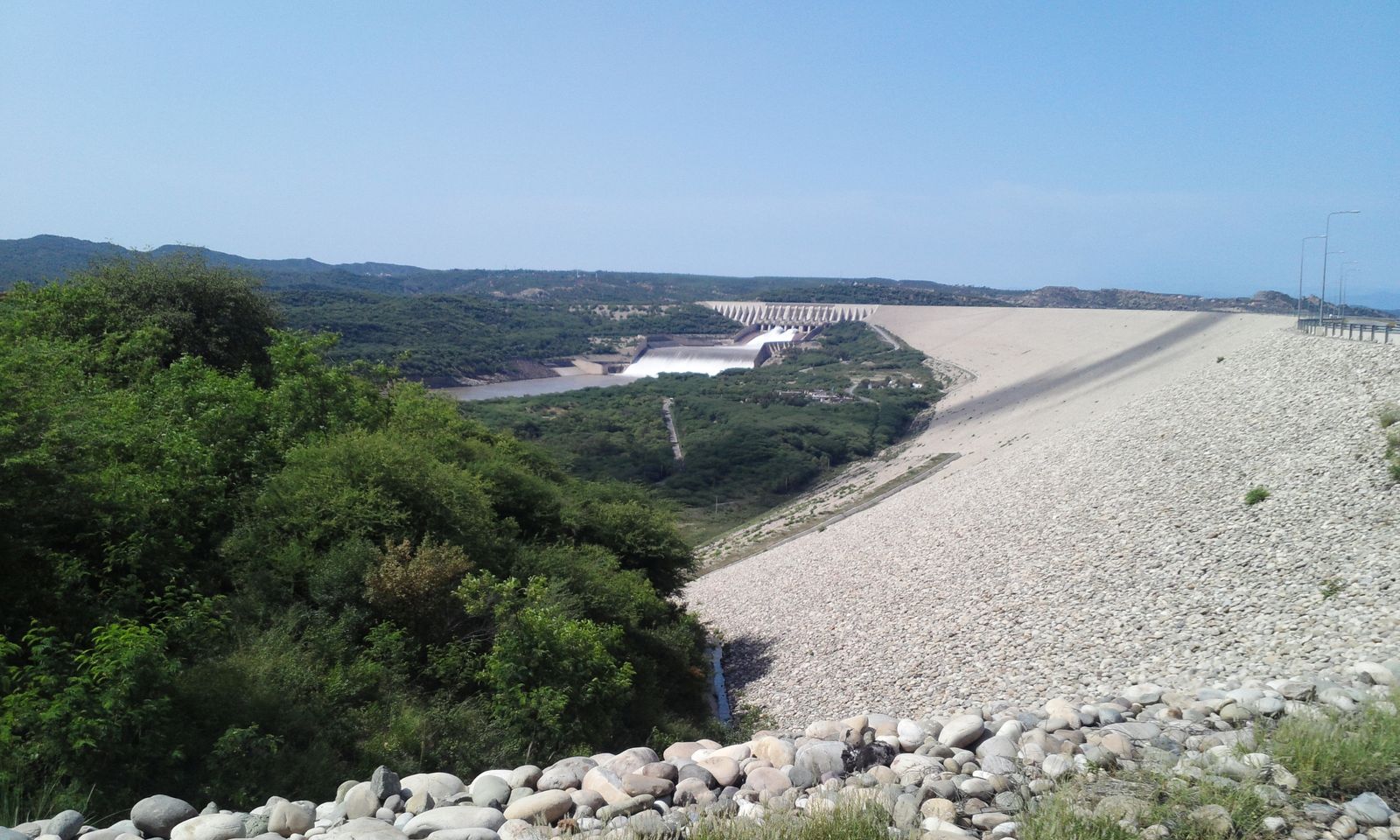
I think the abeyance is defensible as leverage and wrong as policy, and I can hold both. The treaty survived 1965. It survived 1971. It survived Kargil. For sixty-five years it was the single most credible thing India had ever said to Pakistan — that there are commitments we keep even while you are hurting us, because we are the kind of state that keeps them. That credibility was an asset on the books. Abeyance spent it, and the receipt has not arrived.
A commitment kept through a bad decade is worth more than a concession made in a good one.
None of this is affection. It is arithmetic. A reforming leader needs something to show his own people inside a year, and India is the only neighbour large enough to produce it quickly.
And if they incline to peace, then incline to it also, and rely upon Allah.
That verse is an instruction to the stronger party as much as the weaker one. The obligation falls on whoever is in a position to respond. On most days across that border, that is us.
Our interest really is that simple. China wants a corridor. America wants a capability. We want a neighbour we can stop thinking about. There is no version of this where India gains from collapse next door — a failed state on that border is not a victory, it is a longer and more expensive problem with worse weapons loose inside it.
What nīti says
Nīti says this is impossible, and nīti has the better of the argument. I will put its case properly rather than wave at it.
The institution will not dismantle its own economic base, because no institution ever has. The constituency for permanent hostility is organised, funded and awake; the constituency for normalcy is none of those things. Every opening in seventy-nine years has been killed by a single incident, usually timed by people who wanted it killed. A general who begins this will likely be replaced by one who does not. And Indian politics has its own appetite for the quarrel, which I am not going to pretend is absent.
I have no answer to any of that.
What I have is twenty years of watching arrangements that everybody called permanent. They do not bend. They hold, and hold, and then one person inside decides the thing is no longer worth defending, and it goes in a season. The pressure outside never does it. It only ever sets the price.
Ibn Khaldun put the turn at about a hundred and twenty years. My own instinct says a hundred. Either way it is rare enough that nobody plans for it, which is precisely why nobody is ready when it comes.
इति ह भविष्यति. So it will be.
The wager
An essay that only explains is a comfortable thing to write. Twenty years on nobody can say whether it was right, which is usually the point.
So every Vimarsh I publish ends here, with something that can be checked against the world by people who do not care about my reputation.
Here is this one.
I am saying the turn, if it comes, announces itself economically before it announces itself politically. Not with a speech. With a balance sheet. The order of events is divestment first, deference second, democracy third — and anyone watching for the speech will miss it by several years.
Five markers. All public. All checkable by anyone with a search engine.
1. A formal transfer of a major military commercial trust — the foundations, the welfare trusts, the housing authorities — into civilian or public ownership. Not a committee. A transfer. 2. Two consecutive army chiefs leaving at the end of their terms without extension, amendment or emergency. One is an accident. Two is a norm. 3. A general election whose result visibly embarrasses the establishment, accepted anyway, with that government completing a full term. 4. Defence falling as a share of federal expenditure for three consecutive years while federal plus provincial spending on health and education, as a share of GDP, rises. Since the 18th Amendment of 2010 health and education are mainly provincial subjects, so the federal budget alone would miss most of that money. 5. Overland trade with India operating at scale and surviving an incident without closing.
How to score it. The first marker shows in the Gazette of Pakistan and the company register of the Securities and Exchange Commission of Pakistan, where a foundation or trust changes hands. The second and third sit in ISPR's own announcements, the Gazette notifications of appointment and the Election Commission of Pakistan's published results. The fourth is in the Finance Division's annual Pakistan Economic Survey, which reports consolidated federal and provincial health and education spending as a share of GDP, read against the defence line in the federal budget. The fifth is in the Pakistan Bureau of Statistics trade tables and India's Ministry of Commerce export data by country, with the Attari-Wagah land port as the place to watch.
My call, first published 7 October 2026.
By 2035 I expect at most one of these. By 2045 I expect two. If three or more have happened, the arrangement has broken in my lifetime and earlier than almost anyone predicted. If none have, I was wrong, and I will write that essay rather than quietly deleting this one. I would rather be the man who said so in advance than the one who explains afterwards that he always had doubts.
The second marker is the one I would watch hardest. It is the cheapest to do and the most revealing, because an institution that can give up a two-year extension can eventually give up a factory.
Why I am writing this down
I have no standing here. I run companies. I have never been in a room where any of this is decided and I am not going to pretend the view from my desk is the view from theirs.
I am writing it because written things wait.
Machiavelli put on court robes in a farmhouse and wrote for men who would not be born for centuries. Ibn Khaldun wrote his book in a borrowed castle with plague behind him and nothing ahead. Thucydides wrote for the second reading. None of them were being read by anyone who mattered at the time. All of them were eventually read by someone who did.
Somewhere there is an officer who already believes most of this and has never heard it said out loud, least of all from this side of the line. If he ever finds it, I would like him to know that a man in Gurugram was hoping he existed, and was not hoping it only for India's sake.
A neighbour worth respecting is worth more to us than a neighbour worth defeating.
That is the whole argument. Everything above it is just the evidence that it has been true before.
A neighbour worth respecting is worth more to us than a neighbour worth defeating.
Nikhil Sharma, writing as Nishkrant Nikhil. Gurugram, 7 May 2025 — the day of Operation Sindoor. Published 7 October 2026.
Sources for the scoring note: the 18th Amendment and the devolution of health and education to the provinces, Dawn, 7 February 2015; the Pakistan Economic Survey 2024-25 figures for consolidated federal and provincial education and health spending as a share of GDP, as reported by Nukta from the Finance Division's survey.