विमर्श Vimarsh · Samājnīti
The Longest Consequence Loop I Know
Why I am asking you to plant trees — and why One Tree Planted is where I would send the money.
Nikhil Sharma · समाजनीति Samājnīti · 28 April 2026 · 13 min read
I have no financial relationship with One Tree Planted and was not asked to write this.
November
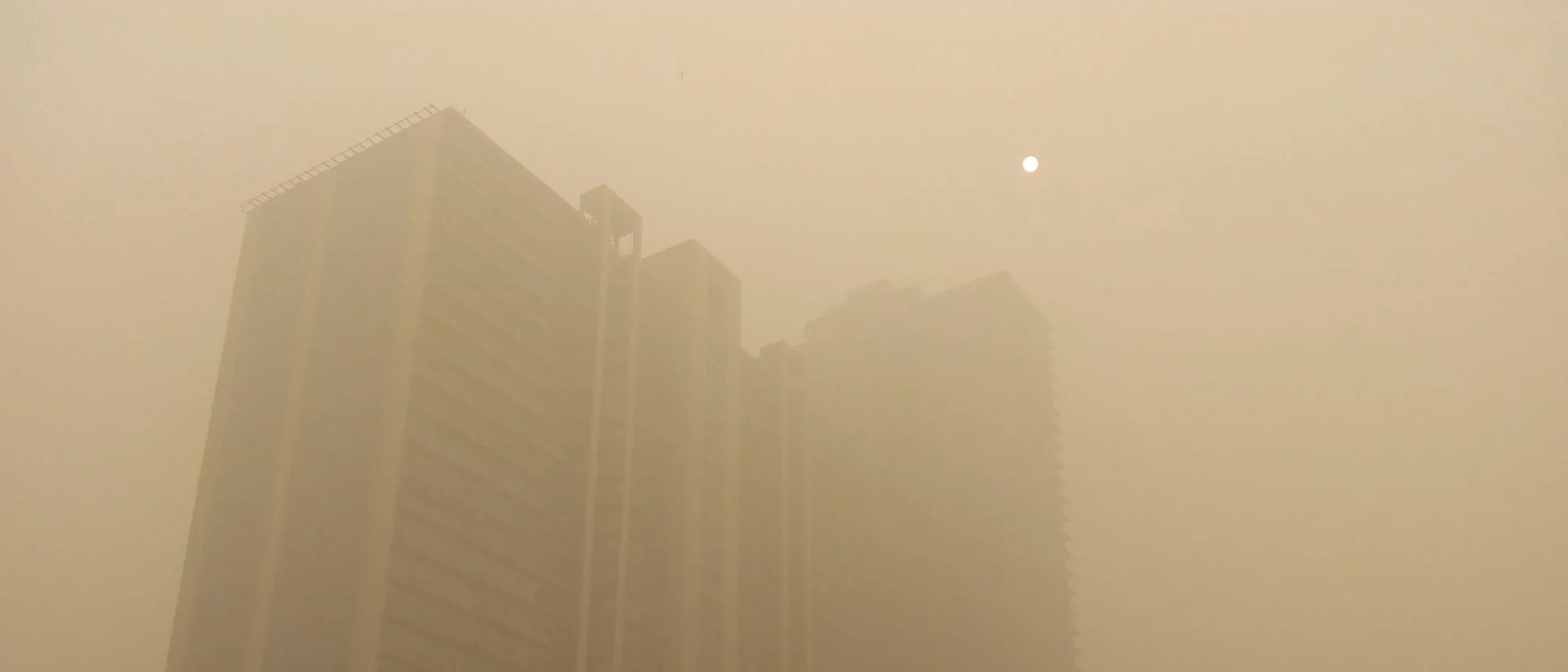
There is a particular quality to a Gurugram morning in November. You wake up and the light is wrong.
Not dark exactly. Filtered. The neighbour’s building four hundred metres away has gone soft at the edges and you find yourself doing the arithmetic every parent in this city does without meaning to — how many years of this, at what cost, to which lungs.
I have been building businesses since 2005 and this is the city I have watched fill in. And I have come to think that the thing we are short of is not awareness. It is follow-through.
Everyone already knows about the trees.
They know it in numbers now. I am going to put four of them in front of you because an essay that ends by asking for money should show its arithmetic first.
November 2024 averaged 374 on the Central Pollution Control Board’s index. That is the whole month. Not the worst day. Not one day in it was rated good or satisfactory or even moderate and eleven of them were severe. It was the worst November since the index began in 2015. November 2025 came in at 357 and the newspapers called it an improvement. I live under that number. So does everyone I employ.
The forest figures are the other side of the ledger. India reports 25.17 per cent of its area under forest and tree cover in the 2023 State of Forest Report. Forest alone is 21.76 per cent. The gain since the previous report two years earlier was 1,445 square kilometres across the whole country. That is roughly one Delhi. In two years. For a nation that announces plantation drives in the crores every monsoon.
And 42 per cent of all the mangrove India has is in one state, which is to say in one forest. The Sundarbans is not a line item in the national figure. It is the figure.
The last number is the one I want you to carry out of this essay. One in three. I will come back to it.
The problem is never the intention
I run a method for a living. Four beats — Commit. Act. Account. Consequence. — and the only question it exists to answer is not what you intend but what happens when you do not do it.
Most people do not fail on strategy. They fail in the gap between saying and doing. And the reason that gap exists is almost always the same: nothing followed. No consequence arrived. The commitment simply dissolved and nobody noticed.
Environmental giving is that gap at civilisational scale.
I have watched founders commit in January to a thing nobody checks in April. Trees are the same failure with a longer fuse. The only difference is who pays. The founder’s gap costs him his company. The planter’s gap costs somebody else their air.
We commit constantly. Pledges. Net-zero targets. A line in the annual report. Then no consequence lands for a decade and by the time it does the people who committed have moved on. It is the least accountable category of promise we have invented.
Which is exactly why I have become interested in trees. A tree is the longest consequence loop I know. You commit today. You act in one season. You account in three years when it fruits or it does not. And the consequence — shade, soil, water, air, income — arrives across fifty years, mostly to people who are not you.
That last part is the whole point.
I did not invent the idea that a tree is a consequence you plant for someone else. The Matsya Purāṇa has Pārvatī say it when the gods ask why she is tending an aśoka sapling as though it were a child.
दशकूपसमा वापी दशवापीसमो ह्रदः । दशह्रदसमः पुत्रो दशपुत्रसमो द्रुमः ॥
A pond is worth ten wells. A lake is worth ten ponds. A son is worth ten lakes. And one tree is worth ten sons.
Read it as arithmetic rather than as piety and it is a statement about time. A son looks after you for one lifetime. A tree looks after people you will never meet for several. The verse is making the case for a consequence loop longer than the person who starts it. Which is exactly the loop I spend my working life trying to build inside companies and almost never manage to. Companies have quarters. A tree has only years.
A tree is the one investment whose return you are not supposed to live to collect.
One in three
Here is what the fourth number means on the ground.
Between 2019 and 2022 Delhi moved 16,461 trees out of the way of roads and metro lines under a policy that requires 80 per cent of them to be alive a year later. The forest department’s own count found 5,487 alive. One in three. On the Dwarka Expressway it was 37 per cent. On the Central Vista it was 30. Every one of those trees was committed to in writing and photographed on the day it went in. Commit and Act. Then the loop stopped.
It is not a Delhi problem. In 2021 a team led by Eric Coleman and Forrest Fleischman looked at 430 plantation sites in Kangra district in Himachal Pradesh and surveyed 2,400 households living beside them. Decades of planting. Their finding in Nature Sustainability was that forest cover at those sites had not increased. The species had changed — away from the broadleaf trees local people actually used — and the canopy had not grown. The trees were planted. The forest did not arrive.
Sunderlal Bahuguna of Chipko put the whole thing in four words that became his slogan. Ecology is permanent economy. He meant it as a rebuke to the contractors cutting the Garhwal hills. I read it as an instruction to the accountant. If the economy is permanent then it has to be audited on a permanent timetable and the first audit of a tree is at year three. Almost nobody runs it. Which is why so many of our forests exist only in the year they were planted.
Planted is a photograph. Surviving is a forest.
So here is the third beat, done properly, for anyone who gives. Before you give ask three questions. What is your survival rate at year three and who counted it. Who waters the tree in the first dry season and what do they get if it lives. Who owns the fruit. An organisation that can answer all three has a loop. One that answers with the number planted has a photograph. The questions take four minutes and they are the only due diligence that matters here.
Why this organisation
I am not going to pretend I did an exhaustive audit. I did what a reasonable person should do before recommending anywhere to send money — I read their filings, checked what they actually claim, and looked hard at the work they do in the country I live in. I have no relationship with them. They did not ask for this and no money has passed in either direction.
One Tree Planted is a registered 501(c)(3) environmental nonprofit — Tax ID 46-4664562 — working out of Shelburne in Vermont. Their stated numbers are 171 million trees since 2014, across 84 countries, through 489 planting partners. Brands you will recognise fund them. Coldplay. FedEx. Volvo.
One thing to know before you give from India. A 501(c)(3) is an American registration. A gift to it earns you nothing under section 80G of the Income-tax Act, which covers only donations in rupees to institutions the Indian tax department has approved. If the deduction matters to you, or you would rather the money never left the country, the Indian option I would point to is the SankalpTaru Foundation, set up in 2012, which plants native fruit-bearing trees on farmers’ own land, geo-tags every tree in its app, maintains them for three to five years and is approved under 80G. By its own count it has planted more than 3.5 million trees with about 35,000 registered farmers across 26 states and union territories. I have no relationship with them either and I have not counted their trees. Ask them the three questions from the last section before you give. They are the same three.
The scale is not what convinced me. Scale is easy to claim.
What convinced me is the shape of their work in India.
The India work is the argument
Three things are running here and each one is designed so that the tree has a reason to survive.
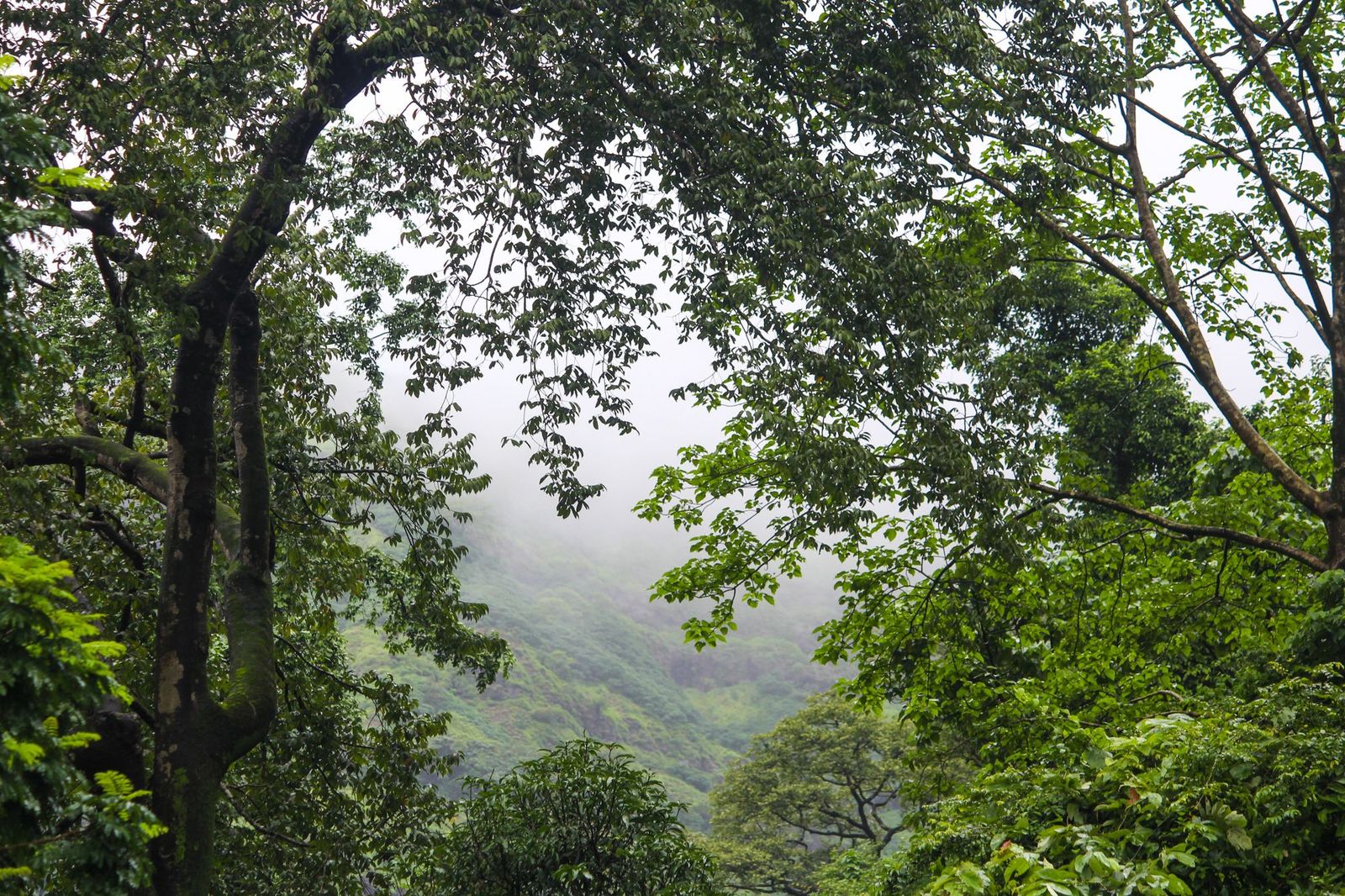
Agroforestry at the edges of Nagarahole and Bandipur. Native fruit and medicinal trees planted in the buffer between national park and village. This is not decoration. It reduces human-wildlife conflict at the boundary while diversifying what a family at that boundary can harvest. Two problems. One intervention.
Women-led mangrove restoration in the Sundarbans — the largest mangrove forest on earth at roughly 140,000 hectares. Women run the nurseries and the monitoring. The mangroves take the storm surge before it reaches anybody’s home. Coastal protection and economic agency in the same programme.
Five million fruit trees across several Indian states with smallholder farmers. Within that, a 500,000-tree project with Sustainable Green Initiative in Uttar Pradesh, Haryana and Odisha — moringa, papaya, banana, lemon, guava, apricot, pear, peach, jujube. The fast varieties fruit within eight to ten months. The rest take about three years. Their projection is that each tree returns at least ten dollars a year in food and nutrition to the household growing it.
Read that last one again and notice what it does.
It gives the farmer a consequence. Not a moral one. An economic one. If the tree lives the family eats and earns. If it dies they lose something real. Nobody needs to audit them from Vermont because the incentive is already sitting in the soil beside their house.
That is the difference between planting a tree and growing a forest. Most reforestation failure is not a planting failure. It is a survival failure — saplings in the ground for the photograph and nobody with a reason to water them in year two. A fruit tree fixes that by making the person nearest to it the person who benefits most.
I find that structurally beautiful. It is the consequence loop, in agriculture, over decades.
Wangari Maathai understood this before anyone put a number on it. When she gave her Nobel lecture in December 2004 she did not talk about carbon. She said the Green Belt Movement had planted over thirty million trees that provide fuel, food, shelter and income. And then the sentence that is the whole method. Tree planting is simple, attainable and guarantees quick, successful results within a reasonable amount of time. Fuel. Food. Shelter. Income. Every one of those is a consequence that lands on the person who did the planting. That is why her trees lived and the Delhi transplants did not.
The person nearest the tree must be the person who gains most if it lives.
What I will not tell you
I would rather be useful than inspiring, so — three honest caveats.
A tree is not an offset. Do not let anyone sell you planting as permission to keep emitting. The carbon maths is slow, uncertain and easily overstated. Plant because forests are good, not because you have bought an exemption.
Planted is not the same as surviving. Any organisation quoting only trees planted is quoting the easy number. Ask about survival rates at year three. The reason I favour the fruit-tree and agroforestry model is precisely that it has an answer.
And if you are a business reading this — do not do it quietly and do not do it loudly. Do it consistently, tie it to something real in how you operate, and then say what you did in plain numbers. Anything else is a press release with leaves on it.
There is a fourth thing I will not tell you and it is a limit on me. I cannot verify One Tree Planted’s survival rates in India from Gurugram. I have read what they publish and I have read what their partners publish and I have found the design sound. I have not stood in an Odisha orchard and counted. If someone has, I would like to hear from them, and if the number is bad I will put it here.
The betters meet in the soil
I describe what I do as the business of happiness — better business, better wellness, better travel, better skills. It sounds soft until you look at where those four actually touch each other.
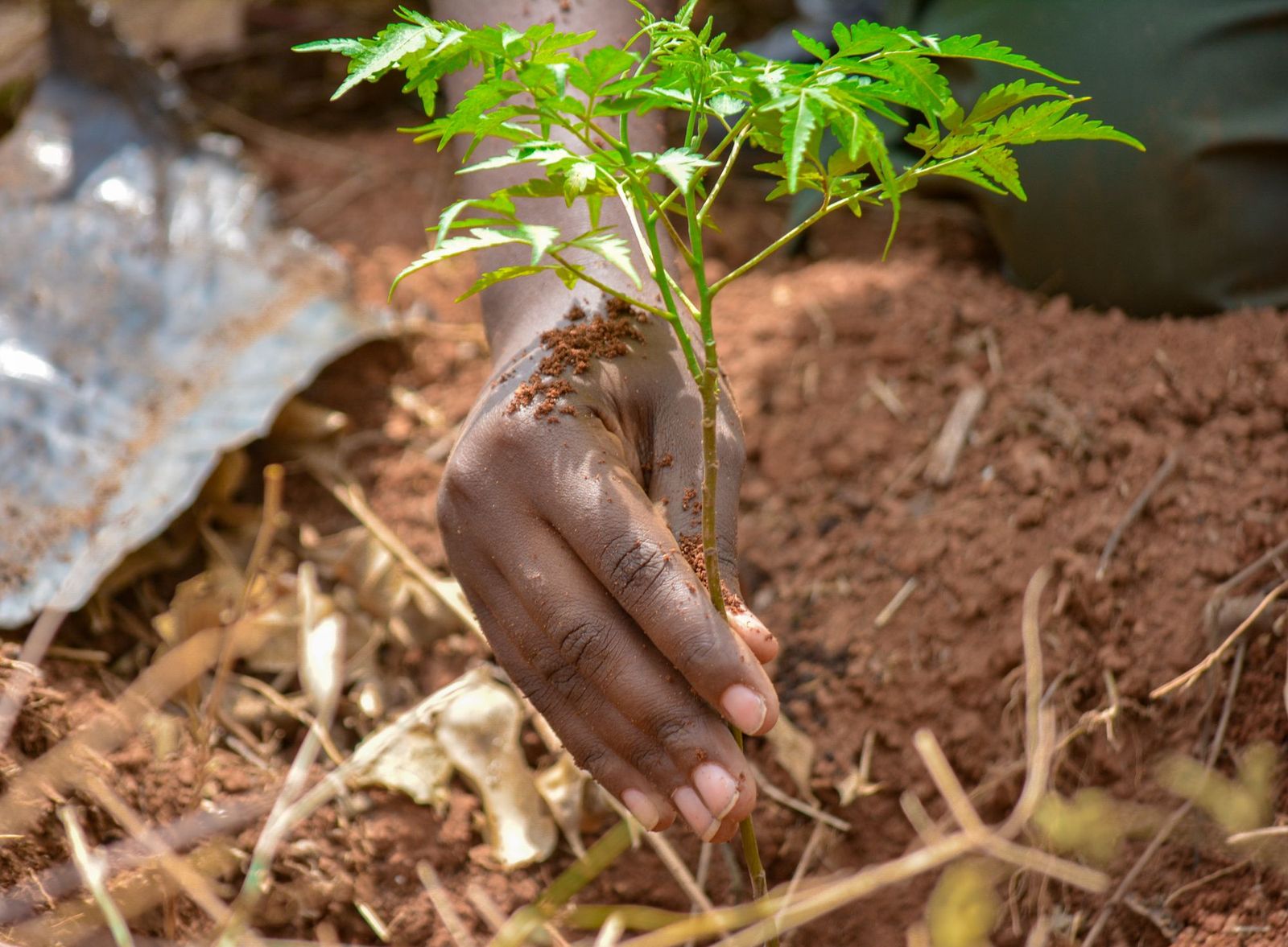
They touch in the ground.
A farmer in Odisha with nine fruiting trees has better skills and better business in the same object. A child in Gurugram breathing air that is measurably less hostile has better wellness. A traveller who comes to India and finds the Sundarbans still standing has better travel, and the Sundarbans has a reason to still be standing.
None of that is abstract. All of it is downstream of somebody putting a thing in the earth and staying around long enough to be accountable for whether it lived.
Tagore wrote in Fireflies that trees are the earth’s endless effort to speak to the listening heaven. I am not a poet and I would put it lower down. A tree is the ground’s only way of keeping a promise longer than the person who made it.
The wager
An essay that asks for money should end with a claim that can be scored. This one has two and both carry dates.
First. No November between now and 2029 will average below 300 on the CPCB index for Delhi. Not 2026. Not 2027. Not 2028. Not 2029. I would be glad to be wrong and I do not expect to be. The causes are structural — stubble, winter inversion, traffic, construction dust — and none of them is being addressed at the scale that moves a monthly average by seventy points.
Second. The next two State of Forest Reports, whichever years they appear in before 31 December 2030, will each put India’s forest and tree cover within half a point of 25.17 per cent. The needle will not move. The pledges will. We will keep planting on paper faster than we grow in the ground. If either report shows forest and tree cover above 26 per cent I was wrong about the gap between committing and accounting at national scale, and I will say so in this space.
And one for me, since the method applies to the man running it. This essay is a commitment with a date on it. In September 2029 I will come back and write what lived, whether the number flatters me or not.
My call, first published 28 April 2026.
So
Plant some. It costs less than the lunch you will forget by Thursday.
Do it here. Pick India if you want to see it. Pick anywhere if you do not. Or do it through SankalpTaru if you want the receipt to count in Gurugram.
And then — and this is the part that matters — go back in three years and check whether it lived. That is the beat everybody skips. It is also the only one that was ever going to work.
Go back in three years and check whether it lived.
Nikhil Sharma, writing as Nishkrant Nikhil. Gurugram, 28 April 2026.
Sources: One Tree Planted for registration and headline figures. Our Work in India for the Nagarahole, Bandipur and Sundarbans programmes. Announcing 500,000 Fruit Trees for the Sustainable Green Initiative partnership, states, species and the per-tree projection. Delhi’s November averages — 374 in 2024 and 357 in 2025 — as reported by The Tribune from CPCB data, December 2025; the worst November since 2015, eleven severe days and no moderate day from AFP via Yahoo News. ISFR 2023 figures as released by the Forest Survey of India, December 2024; the mangrove shares by state as told to Parliament on 6 February 2025. Delhi transplant survival from Delhi Forest Department figures reported by Outlook. Coleman, Fleischman and others, Nature Sustainability, 2021. Maathai’s Nobel lecture, 10 December 2004. Bahuguna’s slogan is the title of George Alfred James’s study of him, SUNY Press. Tagore from Fireflies, 1928. The Matsya Purāṇa verse is at 154.512. SankalpTaru’s founding year, tree and farmer counts, geo-tagging and three-to-five-year maintenance from 30 Stades, 17 March 2023, as stated by the foundation; its 80G eligibility as listed on Give.do. The 80G rule that only rupee donations to approved Indian institutions qualify, Motilal Oswal’s guide to section 80G.