विमर्श Vimarsh · Udyamnīti
The Shop Next to the Gold
T. S. Kalyanaraman sold cloth for two decades beside a lane of jewellers in Thrissur. In 1993, five days short of his forty-sixth birthday, he opened one showroom, put a price on every piece and then waited seven years before opening a second. It is now 507 showrooms and ₹35,743 crore of revenue. What a founder should take from it, and what not to.
Nikhil Sharma · उद्यमनीति Udyamnīti · 11 October 2026 · 7 min read
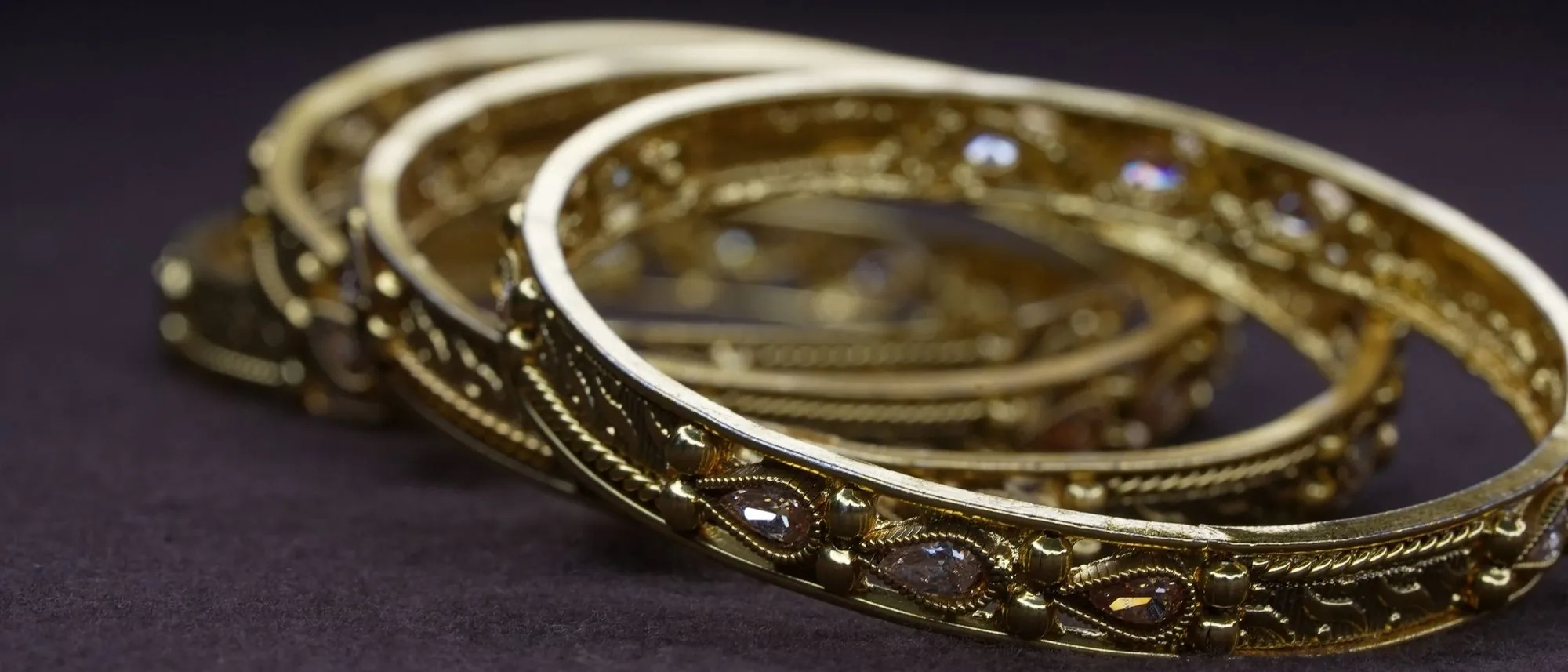
For most of his working life T. S. Kalyanaraman sold cloth. His father’s textile shop in Thrissur stood next to a lane of jewellers, and from the age of twelve he watched the town walk past his counter to buy gold.
He was born in Thrissur in April 1947, the eldest son of T. R. Seetharama Iyer, and learnt trade at his father’s side. For two decades he cut cloth, kept the cash and listened. What he heard from the lane next door was the same complaint in a hundred forms. A family buying the most expensive thing it would buy that year could not tell how pure the gold was or how the price had been worked out. It bought on trust and hoped the trust was deserved.
On 18 April 1993, five days before his forty-sixth birthday, he opened his own jewellery showroom in Thrissur. The capital was his savings and a loan from a bank. Accounts of the split differ: his son’s telling is ₹25 lakh of savings and ₹50 lakh borrowed, other tellings put the loan higher. Every version agrees that a textile merchant in his mid-forties put his name on a bank loan to enter a trade he had only ever watched from the next counter. Thirty-three years later Kalyan Jewellers runs 507 showrooms and earned ₹35,743 crore of revenue in the year to March 2026.
He did not invent a product. He priced one that everyone already wanted and nobody fully trusted.
Twenty years of research nobody paid for
Founders are told to interview customers. Kalyanaraman did something better and slower. He sat next to the market for two decades. He knew the goldsmiths by name, knew how the trade made its money and knew exactly where the customer felt cheated, because the customer said so on the way back past his shop.

That is the oldest form of customer discovery and still the best. The [customer interview](/library/the-customer-interview-done-properly) is a way of buying in a week what proximity gives you in years. Most Indian businesses that last were started by someone who stood beside the problem long enough to stop guessing about it. The lane was his research department and it cost him nothing but attention.
What he sold was certainty
The first showroom was four thousand square feet with all its stock on display. The practice the company is best known for is the price tag: a detailed tag on each ornament showing what the customer was paying for, making charges included, at a time when the price was usually whatever the counter said it was. By 1996 the company was paying for newspaper campaigns to teach customers about gold purity and hallmarking, which is to say it was spending money to make its own customers harder to cheat.
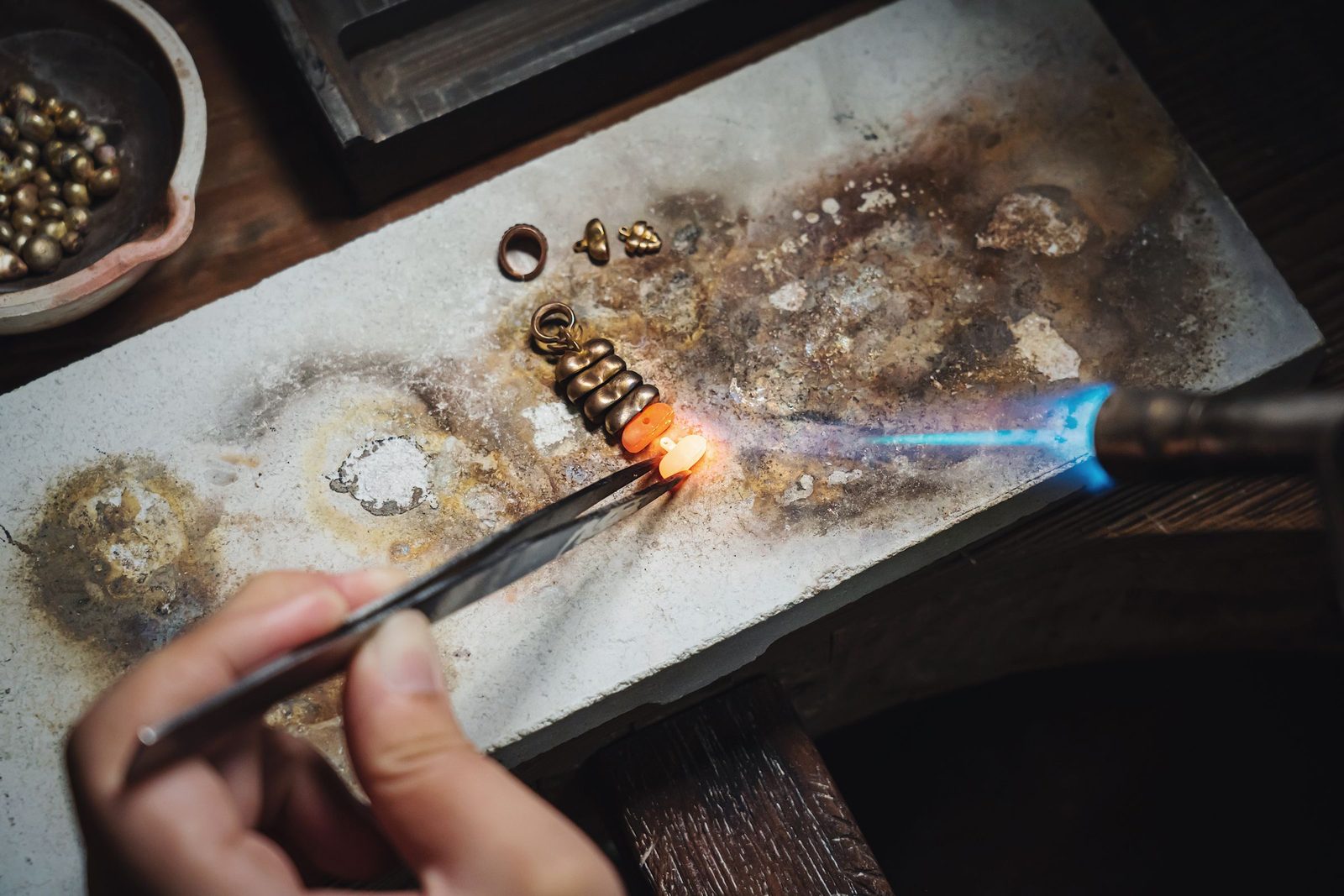
Look at the dates. India’s Bureau of Indian Standards began a voluntary gold hallmarking scheme in April 2000. Hallmarking became compulsory on 23 June 2021. A shop in Thrissur was selling certainty seven years before the state offered a standard and twenty-eight years before the state required one. That is the whole strategy. The regulator eventually made purity the minimum. By then Kalyan had spent a generation being the name people associated with it.
This is the argument of a short line on this site: [trust is the only asset that gets cheaper every year you hold it](/soch/sutra/trust-gets-cheaper-every-year-you-hold-it). The first customer who checks the tag costs you an explanation. The ten-thousandth arrives already convinced.
Seven years with one shop
Here is the part most retellings hurry past. For seven years there was one showroom. No second branch, no franchise, no expansion plan announced to the newspapers. Only after that did the company open in Palakkad, and only in 2003 did it cross into Coimbatore in Tamil Nadu. His son Ramesh, describing the Palakkad opening, said the family “realised the importance of hyperlocal approach.” They had learnt it by getting the second store slightly wrong and fixing it.
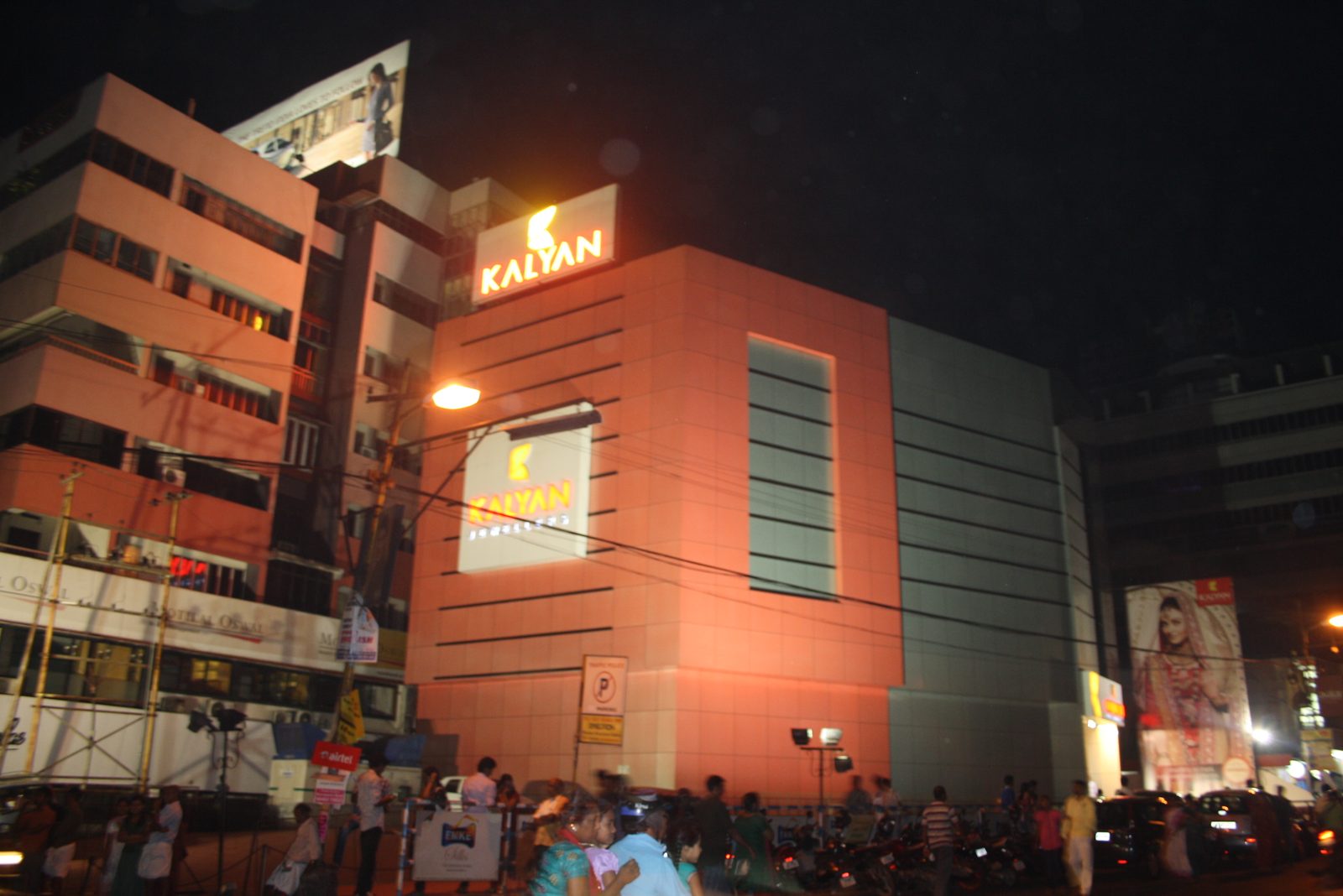
Seven years with one store is not timidity. It is a founder refusing to copy something he has not finished understanding. A jewellery showroom is a vault, a bank, a factory floor and a theatre at once. Running one well for seven years meant that by the time there were two, the second one could be run from a method rather than from the founder’s presence. Most founders I meet open the second location the moment the first one is busy. Busy is not the same as understood.
He did not start from zero
The honest version of this story matters more than the inspiring one. Kalyanaraman did not start from nothing. He had a family business, savings most Indians never accumulate, a relationship with a bank willing to lend to him and twenty years of standing in his town. The Facebook version of the story that sent me to the filings says so plainly, and it is right to.
The lesson is not that anyone can do this from a standing start at forty-five. It is that the advantages a person has accumulated by forty-five are real capital and should be used deliberately. Reputation in a town, a banker who knows your name, a trade you understand from the next counter. Most mid-career founders underrate these and try to start like a twenty-four-year-old in Bengaluru with a pitch deck. Kalyanaraman started like a man who had spent two decades earning the right to be believed in Thrissur.
Capital at the right time, not the first time
Outside money came late. Warburg Pincus committed ₹1,200 crore in 2014, twenty-one years after the first showroom, in two tranches that ended in 2017. The company bought a majority of the online jeweller Candere in 2017 and the rest in 2024. It listed on the stock exchanges in March 2021 with an issue of ₹1,175 crore. Gujarat, its first big push outside the south, came in 2012 with an advertising campaign fronted by Amitabh Bachchan.
Every one of those moves sat on top of something already working. The private equity bought into a method, not a promise. The listing sold a business that had been compounding trust for nearly three decades. The order matters. Proof first, then capital, then scale. Most of the founders who come to me want the order reversed.
A thin margin and a wide moat
One number in the filings deserves more attention than the revenue. In the year to March 2026 the company made ₹1,350 crore of profit after tax on ₹35,743 crore of revenue. That is about 3.8 paise on every rupee. Gold is a thin-margin trade and always will be, because the customer can look up the price of the metal on a phone.
Which is exactly why the trust matters. In a business where everyone sells the same metal at the same published rate, the only thing left to compete on is whether the customer believes you about the rest: the purity, the making charge, the buy-back. Kalyan built a ₹35,000 crore business on a 3.8 per cent margin because enough people, in enough towns, believe the tag. The moat is not the gold. It is the price written next to it.
What to take from it
One. Stand next to the problem long enough to stop guessing. Two. Sell the certainty your industry is not selling, before anyone makes you. Three. Do not open the second location until the first one runs without you. Four. Use the advantages you have accumulated; starting late with a reputation is not a handicap. Five. Take outside capital when it buys speed for something proven, not when it buys time for something unproven. Six. In a commodity, the margin is thin and the moat is belief. Protect the belief.
The wager
Every essay on this shelf ends on a dated bet. Here is this one. By 11 October 2031 Kalyan Jewellers will report annual revenue above ₹80,000 crore and its profit after tax will still be under five per cent of revenue. The growth will come from towns, not from margin, because the business it is in rewards trust with volume and never with price. I will check the filings on that date and say what I find.
Gurugram, 11 October 2026. Converted from a post by Karo Startup that deserved the full story and the footnotes.
Sources, checked 11 October 2026. The man and the first store: T. S. Kalyanaraman for his birth date and father; Kalyan Jewellers for the 18 April 1993 opening, Warburg Pincus’s tranches and Candere. The textile shop, the capital, the seven years, Palakkad, Coimbatore, the price tags, the 1996 campaigns and Ramesh Kalyanaraman’s words: YourStory; the higher loan figure and the 2012 Gujarat launch, smallcase. The ₹1,200 crore commitment: Madhyamam, 20 October 2014. The IPO: Money9. Hallmarking: IMPRI. The 31 March 2026 showroom count: the company’s Q4 FY26 business update to NSE. FY26 revenue and profit: GJEPC Solitaire. The post that started this: Karo Startup on Facebook.